Saturday, September 30, 2006

Boys of the Lough

"Boys of the Lough" 1972
"Second Album" 1973

Boys of the Lough are one of the past masters of celtic music, combining members from several celtic traditions with a long history; where other celtic groups last a few years, the Boys are now in their third decade and retain two of their earliest members. Like that other long-running act the Chieftans, their music tends to the formal; impeccable technique and sensitivity, with large, sometimes classical-style arrangements, and very tight ensemble playing. They lack the fire and roughness of other groups; the overall feeling is of a group of skilled, well-integrated musicians playing together for the pure pleasure of it.

The history of the Boys has several twists and turns. The group was formed in 1967, as a trio of Cathal McConnell, Tommy Gunn of Fermanagh and Robin Morton from Portadown. Tommy Gunn later dropped out and the remaining duo recorded "An Irish Jubliee" in 1969. At the sametime, Shetland fiddler Aly Bain and singer/guitarist Mike Whelans were playing on the Scottish folk circuit. The two duos met up at the Falkirk folk festival where they played together and some time later, in 1971 came together for good. Dick Gaughan of Leith replaced Mike in 1972 and this lineup recorded the first 'official' group album in 1972.

Dick, in turn, left in 1973 and was replaced by Dave Richardson of Northumberland, bringing in new instruments including, cittern, banjo and mandolin. This lineup continued for several year, touring widely in Europe and America and releasing 6 albums, two of them recorded live. Live at Passim's was recorded at Passim's in Cambridge, Massachusetts, and Wish You Were Here comes from a tour of the Scottish Highlands and Islands. Robin Morton left in 1979 and was replaced with Dave Richardson's brother, Tich, on guitar. Tich was killed in a road accident in late 1983. After some time, the band came together again with new members Christy O' Leary and John Coakley and have kept that lineup ever since.

Aly Bain: Fiddle
Dick Gaughan: Vocal, Guitar (1st album)
Cathal McConnell: Vocal, Flute, Whistle
Robin Morton: Vocal, Concertina, Bodhran
Dave Richardson: Mandolin, Banjo, Cittern (2nd album)
Producer: Bill Leader

Friday, September 29, 2006

A present from Lost In Tyme

Tir Na Nog "Hibernian"
Live at Hibernian, Birmingham 1995

Reviewer: A music fan
Leo O'Kelly and Sonny Condell recorded this live in 1995 at the Hibernian in Birmingham . There is something of a health warning on the inner sleeve on sound, but the songs are almost manslaughtered by the low quality master tapes.
Out of the twelve songs performed 'Time is like a Promise' and 'So Freely' deliver romantic medieval imagery. Leo O'Kelly's 'Venezuela' has since become his signature tune. The flamenco- style guitar in tandem with the haunting lyrics transport the listener far across the North Atlantic Ocean to the setting of a peasant village in the Black and White TV documentary somewhere in the misty seventies that inspired this melody.

'Two White Horses' makes the new listener believe that a modern version of Simon and Garfunkel is now hitting the new millenium. Some of the other tracks remind one of those love dirges from the dust bowl of Woody Guthrie's 1950's America.

01. Time Is Like A Promise
02. When I Came Down
03. Love Is Like A Violin
04. Someone To Dance With
05. So Freely
06. Driving

07. Venezuela
08. Down In The City
09. Teeside
10. Looking Up
11. Two White Horses
12. Bluebottle Stew

Requested
Michael Chapman "Rainmaker" 1969

In 1969 British singer/songwriter Michael Chapman took the U.K.'s folk-rock world by surprise with his debut album, Rainmaker, on the Harvest label. In an era when each week garnered a new surprise in the music world, gathering serious and widespread critical acclaim wasn't easy, and finding a buying public near impossible. Rainmaker showcases a new talent who holds nothing back for himself. Every songwriting principle and trick, killer guitar riff, and songwriting hook in his bag makes an appearance here (something he would never do again). As a result, there are several truly striking things about the album that makes it stand out from the rest of the Brit folk-rock slog from the late '60s. One of them is Chapman's guitar playing. A true stylist in his own right, he holds a middle line between John Martyn and Bert Jansch with the provocative electric rock funkiness of Martyn juxtaposed against the rock solid folk traditional so wonderfully espoused by Jansch. Another is Chapman's lean, carved, sleek lyrical style, preferring the starkness of poetry to the lush elements of the song styles usually found on records of this type. Both are put to fine use on the opener, "It Didn't Work Out," a gorgeous broken love ballad with a philosophical bent, along with Chapman's doleful resigned vocal; the electric guitars cascade over fingerpicked acoustics, and acoustic and electric basses -- courtesy of Rick Kemp and Danny Thompson. Here, the old-English melody style was welded to a rock backbeat and fused into a whole, rhythmic, elegant, but sparse tale of broken love. The fiery emotions were carried through the measures by Chapman's tumultuous guitar leads. On the title track, an instrumental with thunderstorm sound effects, the weave between electricity and natural sound grows tighter. When playing in traditional or blues styles, such as the dark, menacing folk-blues of "No One Left to Care," Chapman fuses the rock pulse to the folk or blues song, open-tuning his guitars to such a degree that drones created multiple tones and a solid bottom for his voice to pounce down upon. They also create a sense of emotional honesty not so prevalent on the scene at the time -- artists were given to interpret old songs with an air of academic distance -- Chapman chews his words and spits them out while rifling off guitar riffs at every turn that are as gnarly and venomous as anything by Richard Thompson at the time. Not to mention the stunning instrumental "Thank You, P.K., 1944," with its silvery 12-string work that turns the tonal qualities of the instrument inside out so completely you could swear there were three guitars players -- despite the fact that none of the guitar parts were overdubbed -- or the shimmering, high-whining slide work on the rock growler "Small Stones." The CD reissue contains five bonus tracks, a shorter single version of "It Didn't Work Out," and its B-side, "Mozart Lives Uptown," as well as a second part to that track, "On My Way Again," and the humorous but poignant "Bert Jansch Meets Frankenstein" (the latter three previously unreleased). As auspicious a debut as Rainmaker was for its fine songwriting, history has proved it to be more so because it's the only record in Chapman's distinguished catalog where he ever showcased his truly virtuosic talent as a guitarist. Why, is anybody's guess? ~ Thom Jurek, All Music Guide
Requested
Friendsound "Joyride" (US Psych 1969)

Badcat Records:
The late 1960s seem to have found everyone in the music business trying to turn out something deep and meaningful. As such it's probably not much of a surprise that these former members of Paul Revere and the Raiders were doing the same thing. Still, anyone expecting to hear something in the Paul Revere, or Brotherhood vein in going to be in for one major shock.

Self-produced, 1969's "Friendsound" makes absolutely no attempt to go down the commercial road and to ours ears may deserve to be noted as one of the first real "jam" albums. It's also one of those rare instances where the liner notes are dead-on ... "A musical free-for-all ... The idea for Friendsound came to us when we were in the early stages of creating our first album. We rounded up all out musician friends in the area and headed for a recording studio to have a musical free-for-all." That pretty much says it all. Exemplified by material such as the title track and "Childhood's End", the six extended numbers were largely instrumental in nature. Credited as group compositions, songs such as "CHildsong" and "Empire of Light" are full of studio experimentation, including backward tapes, sound effects and acid-influenced ramblings. Raiders members Levin, Smith and Volk were too grounded in top-40 pop to totally abandon such concepts as rhythm and melody, but it's pretty clear late night parting imbued them with a lot more freedom and creative latitude than your typical Paul Revere and the Raiders session. Not for the faint of heart, or top-40 junkies, but worth checking out for the more adventuresome of you out there ...

Thursday, September 28, 2006

Stackridge

"Friendliness" 1972

Although The Man in the Bowler Hat is without question the most fully realized and lavishly produced (by George Martin) Stackridge album, most fans of the band would probably gravitate toward Friendliness as their favorite. Here can be found every quality that endeared the West Country five-piece to a loyal -- but never quite large enough -- following. There's Beatlesque melody, gently surreal humor, and considerable instrumental dexterity that ranged freely between the worlds of pop, folk, jazz, classical, and prog rock. The rollicking instrumental "Lummy Days" is a perfect scene-setter, with Mike Evans' violin and Mutter Slater's flute lyrical one moment and bucolic the next as the melody sweeps between hoedown, bolero, and Vaughn Williams -- all in less than four minutes. Next comes the weightless beauty of the title track, with James Warren's choirboy vocals multi-tracked to bewitching effect. That's followed, even more improbably, by the '30-style foppery of "Anyone for Tennis," and not long after by the Eastern-tinged "Syracuse the Elephant," at over eight minutes long and with Mellotron aplenty, clear evidence that Stackridge could have staked their share of the prog market if they could have kept a straight face long enough. But they couldn't, and to prove it, the next track is a piece of cod-reggae about a cow, called "Amazingly Agnes." In truth this and the heads-down, no-nonsense boogie "Keep on Clucking" (a whimsical diatribe against battery farming) always did sound like grudging concessions to commercialism, and decades later they still do. But the album finishes in triumph with the haunting "Teatime," arguably one of the most convincing fusions of folk, jazz, and classical music in the entire prog rock canon, with none of the ego-fuelled blowing that so discredited the genre. [The CD reissue contains three extra tracks, including the instrumental stage favorite "Purple Spaceships Over Yatton."] ~ Christopher Evans, All Music Guide


"Mr. Mick" 1976

Still riven by internal disputes that would even scupper the band's second coming 20 years later, Stackridge were at least boosted in 1976 by the return to the ranks of flutist and vocalist Mutter Slater and bassist Crun Walter -- though the talents of James Warren were still sorely missed. In fact it was Slater who dominated Mr. Mick, which took Stackridge away from the Zappa-ish tendencies of Extravaganza and back toward their Beatlesque roots. Unfortunately, 1976 was no time to be releasing a concept album, even one that had been chopped up and rendered meaningless by the record company, and Mr. Mick represented the point at which Stackridge finally succumbed to the allied forces of public indifference and punk. It's far from being their best album, but Mr. Mick still has considerable charm, once you get past the somewhat pointless cod-reggae version of the Beatles' "Hold Me Tight." This was ditched, however, when the band issued a revised edition of the album in 2000, complete with all the tracks that were excised first time around at the expense of Slater's story. Since several of these include long stretches of narration that quickly pall on repeated listening, this is one of those rare occasions when you feel a degree of sympathy for the record company. As for the story itself -- a "modern fairytale" about an old codger who visits a magic rubbish dump where all the discarded articles have a tale to tell -- as career advancement went, it was up there with Brian Wilson's Mount Vernon and Fairway. Nevertheless, "Fish in a Glass," "Steam Radio Song," and "The Slater's Waltz" all boast the kind of sumptuous pop melodies that first convinced George Martin to helm The Man in the Bowler Hat. ~ Christopher Evans, All Music Guide


"BBC Radio 1 Live In Concert" 1972-75

Recorded 21 July 1972 (2,3,5,6,7), 15 February 1973 (4 and 8) and 7 January 1975 (1, 9-13) at the Paris Theatre in London. Tracks 2-8: The 'original' lineup of Andy, James, Mutter, Mike, Billy & Crun. Track 1, 9-13: Andy, Mutter, Rod Bowkett, Keith Gemmell, Paul Karas, & Roy Morgan.

Tracks:
01. God Speed the Plough
02. Lummy Days
03. Teatime
04. Anyone for Tennis
05. Amazing Agnes
06. She Taught Me How to Yodel
07. 32 West Mall 1.56
08. Syracuse the Elephant
09. The Volunteer
10. Who's That up There with Bill Stokes
11. No One's More Important Than the Earthworm
12. The Galloping Gaucho
13. Dora the Female Explora

Wednesday, September 27, 2006

Virginia Tree "Fresh Out" (UK Folk 1975)

Essentially the solo album from Ghost (UK) vocalist Shirley Kent, this 1975 offering is folkier in style and content, whilst still retaining the quirkiness of Ghost. With backing musicians including ex bandmates Paul Eastment and Terry Guy, this CD reissue comes with two bonus tracks.


01. Hiding There
02. In My Garden
03. Like Morning
04. Wicker Basket Weaver
05. I'm Glad There Is You
06. Make Believe Girl


07. Harlequin And Columbine
08. Comical Wise
09. Let Us Go Dancing
10. Fresh Out
11. I've Got To Get To Know You *
12. Forever A Willow *

"The Khalsa String Band" (US Folk 1973)

by canonical:
This is a really nice, mellow hippie/folk album. Information on the internet was scarce, so I'd be happy to learn more. From what I could gather, the Khalsa String Band was comprised of Sikh's living in America and Americans won over to the Yogi craze in the 70's. Almost everyone in the band has the last name "Singh", which lead me to believe this was going to be a citar-psych-affair. However, the instrumentation is very simple with just guitar, drums, bass, flute, and keyboards. In fact, there is pretty much zero Middle-Eastern influence in the music. Lyrically they are very spiritually inspired, though. I believe they put out 8 albums, this one being their first.

Download (re-post)

Tuesday, September 26, 2006

Mandy Morton

Mandy Morton "Sea of Storms" 1980

Spriguns was now totally the vehicle of talented vocalist Mandy Morton. And the next step was only naturel, Spriguns did now only seem as being Mandy Morton with a backing band. And so she rebaptised Spriguns into Mandy Morton And Spriguns and made Magic Lady in 1978. Now performing only as Mandy Morton she recorded Sea Of Storms (commercially most successful album) in 1980. And then three years did pass until her six and final release: Valley Of Light. This album is the only one not to feature Mandy's husband Mike Morton, and so Mandy was now the only one who had been al the way from Jack With A Feather in 1975. After the album Mandy retired from music. The last three albums were recorded either for Polydor or Banshee.

More about Mandy Morton here: Click


Mandy Morton Band "Valley of Light" 1983

Album notes from the CD release of Valley Of Light by Mandy Morton Band:
Valley of Light was the last album recorded by the Mandy Morton Band and brought to a close eight years of recordings from a little known cassette called "Rowdy Dowdy Day" through the Decca, Polydor and Banshee years. Mandy and her various bands had made their mark in folk rock history and Valley Of Light was to be the sixth and last album. In fact the album was infact an afterthought. Mandy Morton's work had always been based on the darker side of life: Black magic, war and inevitably death. The subject matter had been accompanied by sombre hard riding rhythms that were very fashionable in the folk rock circles of the mid seventies. The Mandy Morton Band live were a quite different matter altogether "High Energy Rock Drama" as a Danish music paper once described them, and the MM Band audience also demanded a fair smattering of "Pop Folk" too and that's where "Valley Of Light" came in.By 1983 the band were playing almost exclusively in Scandinavia where they created almost a "Flower Power" revival. Mandy's songs reflected this carefree state and "Valley Of Light" was born. The album was virtually a live recording with very few overdubs or studio tricks and captured a side to Mandy Morton's music that only live audiences had enjoyed. The album was never released in Britain. It was thought that the material would be too much of a contrast in Mandy Morton's own words: "Light Years Away".
Graham Brook. (Transcribed by Jonas Juul)

Monday, September 25, 2006

Nick Drake "Guest Works" 1972

V.A. "Interplay One" (1972, UK Longman; LG 0582 24136)
Compiled By John Watts

Includes:
LP1 > Side 2 > Track 3:
I Wish I Was A Single Girl Again (traditional) 2:00
LP2 > Side 1 > Track 1:
Full Fathom Five (traditional, words by W. Shakespeare) 1:10
LP2 > Side 2 > Track 4:
With My Swag All On My Shoulder (traditional) 2:32

Note: Nick plays guitar on all three songs, supporting Vivienne Fowler on "I Wish I Was A Single Girl Again"and "Full Fathom Five" and Robert Kirby on "With My Swag All On My Shoulder", uncredited.


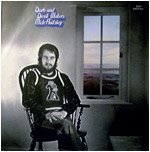
Mick Audsley "Dark and Devil Waters" (1972, UK Sonet; SON 641)

Includes:
The Commissioner, He Come (Mick Audsley) 2:46
Dark and Devil Waters (Mick Audsley) 3:00

Note: Nick plays rhythm guitar on both songs, uncredited

Download (all 5 tracks) re-post
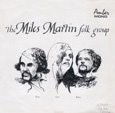
"Miles Martin Folk Group" (UK 1971)

1971 super rare folk album by this UK folk trio originally released on the Amber label. Evocative male/female vocal folk with guitar, string bass, banjo, mandolin and whistle. Features some enchanting three part harmonies and cover versions such as "Leaves That Are Green" "October Song" (Incredible Stringband) and others. For fans of Oberon, Marie Celeste etc.

01. Leaves That Are Green
02. Polly Von
03. Kilfenora Jig
04. Ye Jacobites By Name
05. Once I Had A Sweetheart
06. Fast Freight
07. October Song
08. I Never Will Marry
09. Grandfather's Clock
10. Geordie
11. Gone The Rainbow
12. Sunday Rainbow

Back Cover: Click
The Humblebums "Open Up the Door"
(UK Folk-Rock, Baroque Pop 1970)

If you don't know what you're getting into here, the Humblebums' first album is culture shock a go-go. Billy Connolly, after all, is best-known as an extraordinarily hirsute comedian whose pop fame rests on a U.K. number one dismantling Tammy Wynette's "Divorce" and a follow-up mangling the Village People's "In the Navy." Then there's Gerry Rafferty, who we associate with gentle, catchy, soft folk-rock vibes like "Stuck in the Middle With You," "Star," and "Baker Street." But put them together in a single unit, and the pair is barely distinguishable. Barely. Seven songs apiece see Connolly touching at least a light vein of dry humor (his fine singing voice is more of a shock); "My Apartment" is a belicose take on Al Stewart's bedsitting-room phase and "Mother" is a wryly observed piece of childhood nostalgia which just happens to pack the kind of freakish guitar solo which wouldn't have disgraced Strange Fruit -- Still Crazy before all those years, indeed. But the mood is restrained, the sentiments are sensible, and there's a not a wee swearie in sight. Rafferty, too, is self-absorbed (although that's probably not a surprise) with songs which wander sadly around the backyards of love, kicking cans and wondering where the time all went. "Keep It to Yourself" ranks alongside any of his best-known compositions and "My Singing Bird" is up there with some of his softest. The important thing is, at no point does one listen to the record and start imagining chalk and cheese. Open up the Door is not an album which will set your life afire; rather, it's gentle, warm, and unassuming -- a lovely listen in the wee small hours. And there's not a saxophone solo in sight. ~ Dave Thompson, All Music Guide

Sunday, September 24, 2006

Thanks for the info, Vinylhed
Fotheringay vs. Scissor Sisters

e-mail from a visitor, Vinylhed:
Is it just me Lizard, or does this Scissor Sisters promo shot look a tad like the Fotheringay album cover?

I don't know how this promo shot was taken. But I like comparing these kind of things. How do you think?

*I added a little arrangement to Scissor Sisters' promo.

John Martyn / Nick Drake

BBC "Saturday Live" 25.5.85
Interview with John Martyn (by Richard Skinner)
Download (re-post)

You can read this interview here: The Nick Drake Files
The Druids "Burnt Offering" (UK Folk 1970)

The Druids were a superb acoustic folk quintet who started a little too late to achieve major popularity, amid the presence of outfits like Steeleye Span and Fairport Convention. Formed as a trio in 1969 by ex-pop musician John Adams (vocals, mandolin, bass), and folk singers Keith Hendrick (vocals, guitar, banjo) and Mick Hennessy (vocals, bass), the group played its first gig at the Manchester Sports Guild in November of that year. A few months later, itinerant fiddler Dave Broughton joined them, and in 1970, while appearing in a documentary film about English folk musicians, they met fifth member Judi Longden, who added her voice to the proceedings.

With their reliance on acoustic instruments, the Druids were far more tradition-based than either Fairport Convention or Steeleye Span. Their repertory consisted of traditional English, Scottish, Welsh, and Irish songs arranged for four voices, and their music had a pleasingly archaic feel, not resembling folk-rock at all. If anything, they sounded more like the kind of outfit that A.L. Lloyd or Ralph Vaughan Williams (editors of the definitive collection of English folk songs) would have approved of, without a trace of uncalled for elegance or pretentiousness.

The group broke up in the early 1970s, and Adams later turned up as a member of the group Muckram Wakes and the New Victory Band. They left behind a small but pleasing recorded legacy, contemporary with the best years of Fairport Convention and Steeleye Span but radically conservative in its approach to the music. ~ Bruce Eder, All Music Guide

Sample pic: Click

Download (re-post)

Important: This album is missing Irish ballad "The Castle of Dramore(Dromore)". Track.6 is actualy "Hunting the hare/Exile's jig".
Please help us if you have!

Archie Fisher (Scottish Folk)

"Archie Fisher" 1968
"Orfeo" 1970

Although Archie Fisher is a legendary figure in the Scottish folk music world -- everybody's favorite singer and an enormously influential presence both musically and philosophically -- he has remained largely unknown to the greater pop music mainstream. While the mainstream's a poorer place for that, one gets the idea it suits Archie Fisher just fine.

Fisher was born into a family of semi-professional musicians and learned to play the guitar at a young age. Fisher and his sister Ray formed a skiffle group in the mid-'50s, as most musically inclined young Britons did around that time. Eventually, the siblings formed a vocal duo, releasing their debut album Far Over the North in 1963. In the tradition of the Coppers and the Watersons, Archie and Ray joined with their parents and sister Cilla and her husband Artie Tresize to form the Fisher Family. Playing both traditional material and Archie's own compositions, the Fisher Family were fixtures on the British folk circuit through the mid-'60s and released the album The Fisher Family in 1965. The family group split up in 1966 when Ray married and moved to London and Archie began his solo career.

Fisher's first album, Archie Fisher, was released in 1968. Around that time, Fisher also began his decades-long association with the BBC; Fisher wrote original songs for BBC documentaries on subjects like rural island communities in the Hebrides, and also appeared on radio and television music programs with regularity. Eventually, Fisher began working regularly with the BBC as a producer of radio documentaries and features; in the '80s, he inherited the series Traveling Folk, which he now produces and hosts, from the previous presenter Robin Hall. Fisher's recorded output, for someone with such a long and prolific career, is surprisingly sparse, consisting of a handful of solo albums and a live duo album with Canadian fiddler Garnet Rogers. Fisher has been much more active both as a live performer at festivals and concerts around the world (he directed the much-respected Edinburgh Folk Festival from 1988 to 1992) and as a producer for other artists, including several albums by the duo of Tommy Makem and Liam Clancy and the phenomenal group Silly Wizard. ~ Stewart Mason, All Music Guide

Saturday, September 23, 2006

Video

Bridget St. John "Want To Be With You"
Old Grey Whistle Test, BBC, 1974


Text by ripper:
To mark the anniversary of John Peel's last show, BBC 4 broadcast a program titled "John Peel: In Session Tonight". The show featured a number of artists who had been associated with Peel at one time or another. Many of the clips came from the Old Grey Whistle Test dvds, so couldn't be torrented here. There are some others which I'm not 100% sure whether they have been released or not. This all too brief clip I am confident has not been released.

Dark, smokey voice beautifully in tune and you'll touch the melodic tip of what's so gorgeous about British folkie Bridget St. John. Originally Bridget recorded for John Peel's short-lived Dandelion label [in the late 60s], which promptly gave her the well-deserved label of "chanteuse." Critical acclaim did not equal commercial success , and St. John seemed to vanish [in the mid to late 70s], only to re-emerge in the NYC area with some live performances [such as a Nick Drake Tribute Concert on 1999, and occasional shows since then]

Click picture for some more screenshots.

Descriptions:
Digital TV > DVD > TMPEGEnc MPEG Editor
Video : 4650 Kbps, 25.0 fps, 720x576 (16:9), MPG2
Audio: Dolby Digtal (AC-3), 48000 Hz Stereo 256 kbps

DL

Ian Matthews

"If You Saw Thro' My Eyes" (1971)
"If You Saw Thro' My Eyes - LIVE" (2003)


In late 1970, shortly after his band Matthews Southern Comfort hit number one in Great Britain with its version of Joni Mitchell's "Woodstock," Ian Matthews decided that he needed more creative freedom and left for a solo career. The subsequent album, If You Saw Thro' My Eyes, his fourth and best release since leaving Fairport Convention in 1969, was recorded and released within the next few months. It also reunited him with former Fairport bandmates Sandy Denny, who had left the band in late 1969, and Richard Thompson, who would depart by the time of this album's release. Both would bring their distinctive personalities to the proceedings without ever overwhelming Matthews' own vision. As a bandleader and songwriter, Matthews' growth is quite evident here, guiding a stellar cast through seven excellent new originals and three well-chosen covers (also included is the a cappella "Hinge" and its instrumental reprise). Throughout, Matthews' sweet yet evocative tenor is perfect for the material, which succeeds in its blend of British and American folk, rock, and pop. Furthermore, he once again shows a keen eye for the work of others, while also proving his prowess as a first-rate interpretive singer. A pair of songs written by the late folksinger Richard Farina -- "Reno, Nevada" (resurrected from Ian's days with Fairport) and "Morgan the Pirate" -- are given fresh, inspired readings, highlighted by Thompson, Tim Renwick, and Andy Roberts' superb guitar interplay, providing a real folk-rock edge. But it's the beautiful, prayerlike title track that is the record's crowning moment. Joined simply by Denny's piano and breathtaking second vocal, along with a tasteful backwards guitar interlude by Renwick, Matthews' quiet plea for guidance is as moving and personal a song as he's ever recorded. A number of other highlights, such as "Hearts," "Southern Wind," "It Came Without Warning," and "You Couldn't Lose," make If You Saw Thro' My Eyes one of the best efforts by a Fairport alumnus. ~All Music Guide

32 years after its initial release, A funny thing happened on the Matthews tour 2003. The opportunity came up and the idea was fresh and the recording studio was available so this ground-breaking concept came to pass. Matthews and band recorded the entire album that we all know and love, "If You Saw Thro' My Eyes" - LIVE.

Friday, September 22, 2006

Matthews' Southern Comfort "Later That Same Year" (1971)

Matthews Southern Comfort plays music of the sort that is indispensable for those who own houses in the country with a fireplace and are the recipients of the affections of ladies who cook them organic dinners and wear their wild blonde manes in pigtails much of the time. If this kind of mellow tuneful close-harmony country-tinged polite rock appeals to you as much as it does to me, this band is very much up your alley.

Its heights aren't quite so giddy at the same time that its depths are deeper, but Later That Same Year, Matthews Southern Comfort's third album, nevertheless succeeds at the difficult task of worthily succeeding Second Spring, which to my mind was 1970's premier undiscovered marvel.

As did Spring, Later contains: a couple of light-hearted and sprightly just-for-fun rollicks, Goffin/King's "To Love" and someone named Alan Alderson's "Mare Take Me Home"; a couple of pleasant treatments of currently fashionable composers' works, Jesse Winchester's "Brand New Tennessee Waltz" and Neil Young's "Tell Me Why"; and a generous earful of enchanting low-key laments featuring Ian Matthews' own delicate, almost angelic tenor, all of it played most sympathetically and deliciously sung, frequently in three- or four-part harmony.

As guitarist Carl Barnwell's "Sylvie" (an exceedingly clammy affair whose Andrews Sisterish refrain in particular is gorgeous enough to gag on) is indisputably the albums' nadir, so are his other two contributions, "Jonah" and "For Melanie" (whose lack of musical cohesion is more than made up for by its intriguing lyrics), its twin peaks, with Matthews' own exquisitely-textured "And Me" standing only slightly less lofty.

Listen to either Second Spring or this album and you'll join me in fervently hoping that Matthews' recent surprising departure from Southern Comfort (which, double-surprisingly, occurred while they were being most heatedly romanced by a variety of record companies) will result in twice, and not half, as much such delightful music as theirs being made available for us later this same year and thereafter. ~John Mendelsohn, Rolling Stone, 4/15/71
Gary Farr "Strange Fruit"
(UK Folk/Rock/Blues/Swamp 1970)

Farr, who had started recording in the mid-'60s as a journeyman British R&B/rock singer, showed signs of substantial growth by the time of this 1970 album. He was at this point writing most of his material, sometimes in a somber folk-rock-ish vein with echoes of the likes of Tim Hardin (without as much sentiment) or Roy Harper (without the craziness). Yet his talent did not quite cross the line from glimmers of promise to notable artistry. Some of this is run-of-the-mill bluesy rock in a sort of Band-like or sub-Rolling Stones Let It Bleed vein, and while the moody songs are nice and convincingly performed in his yearning voice, they're not outstanding. He would have done well to fully pursue the folkiest aspects of his work, as heard in such acoustic guitar-dominated tracks as "Down Among the Dead Men" and "In the Mud." The supporting players include three members of Mighty Baby and, in a little-known session appearance, Richard Thompson on lead guitar. ~ Richie Unterberger, All Music Guide

Thursday, September 21, 2006

Requested...
Kazuki Tomokawa "Umi Shizuka, Koe(Tamashii) wa Yami"
(Japanese Avant-folk, Acid-folk 1981)

Kazuki Tomokawa is a prolific Japanese acid-folk singer, poet, and often described as a "screaming philosopher" due to his idiosyncratic singing style.
"Umi Shizuka, Koe wa Yami" (Sea is silent, voice/soul is suffering) is one of his most important work.


personnel:
Kazuki Tomokawa: vo, acoustic guitar
Toshiaki Ishizuka: drums, percussion
Kyoko Furuie: piano, keyboard, chorus
Kazumi Kiyono: bass
Masashi Kikuchi: Shakuhachi, Yokobue
Yukihisa Yumiba: Biwa
(and many guest players)
Produced by Katsuhiko Hasegawa

Tracks:
01. Kanata (The Other Side)
02. Kami ni Nare (Become a God)
03. Issai Gassai Yo-mo Sue-da (It's the End of the World at All)
04. Satsujin to Ao Tenjyo (Homicide and Clear Blue Sky)
05. Chinsetsu-Tange-Sazen
06. Santouka-yo
07. Nah Umi (Hey, Sea)
08. Mochibeni no Hana (Flowers of Mochibeni)
09. Ki-gi wa Haru (Trees are Spring)
10. Kugai Sah

The Magickal Folk of the Faraway Tree (UK Folk)

"The Mildew Leaf" (2004)


Review by Mark Coyle:
Released by Deserted Village who have no contact with the artists, this album is an enigma. It documents travels by a UK folk band around the UK, northern France, Channel Islands and the isles and captures their performances in both English and Gaelic.

It's a highly traditional sounding release but one with a feeling of strangeness running through it's heart as all the best folk music does. There is a feeling of authenticity, of getting back to the music's source, of pretence stripped away. Those searching for lost music that carries on their enjoyment of The Wicker Man soundtrack would do well to look here, the same feeling of strangeness and innocence rises amongst the songs.

'In Aimsir Bhaint an Fheir' introduces banjo and guitar supporting a heady baritone male vocal singing in Gaelic. A Gaelic pipe or possibly flute adds counter melody over the top and gradually accordion is woven in. It's already a magical concoction, enticing and vibrant in its mixture of old and new. As more countermelodies are added on piano and guitar, it swells to become a beautiful and moving ode. This gives way to a communal non-accompanied version of the traditional song 'Spencer the Rover' and then into 'La Bon Marain', a deeply evocative folk ballad starting with sultry flute and guitar. This song has excellent female harmony vocals over the male baritone lead that further enhances the atmosphere.

'The Blackthorn Tree' is a banjo and massed vocal song before the unaccompanied vocal of 'Twa Corbies'. 'Is Lomaidh Coisceim Fads' is another Gaelic ballad with haunting siren harmony vocals. As you listen, you feel some connection to something unknown is being made; it's a haunting listen. 'Sweet Thames Flow Softly' is a song in the round of vocals and sounds like a hundred years old field recording. Peter Ackroyd, the author would adore this seemingly magical invocation of the river's powers in support of love.

Last song 'Time To Go Home' comes too soon and sounds the most conventional of them all at first, although of course this is relatively. Here the sound is like a forgotten seventies soundtrack, the group are together, massed male and female vocals, horns calling, whip rhythms, hand drums, swirling fiddles, nature animals. It moves from delicate ballad to ritual incantation in thirty seconds and ends the album on a somewhat unsettling note.

This is wonderful, important music, the kind we established this site for. It's very inexpensive and absolutely essential for fans of the genre.


"The Cat's Melodeon" (2005 EP)

And this 3inch CDR has all the magic, truly there. Based upon traditionals mostly, I think, the music is worked out with in a way I've rarely heard before. There are often comparissons possible with a group like C.O.B., especially through the melancholy, warm male voice, the banjo which plays its own melodic layers, the sweet and sad flute, and the female vocal arrangements, which are especially rewarding and original on “Tralawney”. The arrangements are never overloaded but always expressed very effectively and with some flow, with some vocal arrangements that are completing the warm singing, some 12 string guitar, and melancholic finishing touches by flute or violin. A must-have.

Wednesday, September 20, 2006

"Colin Scot" (UK Folk-Rock 1971)

In later years, this singular set would leave a new generation of classic rock fans scratching their heads. Just what were so many superstars doing backing this unknown singer? However, in 1970, Colin Scot was at least as famous as any of those now legendary names that guested on this his debut solo album, with the singer/songwriter regularly packing the house for his frequent live shows. Of course, those gigs brought Scot into the orbits of a host of other folk-tinged groups from the day, but it seems to have been producer John Anthony who brought most of this crew together. This included Brinsley Schwarz of the eponymous band, Genesis' Peter Gabriel and Phil Collins, Van Der Graaf Generator's Peter Hammill and David Jackson, King Crimson's Robert Fripp, then-Strawbs' organist Rick Wakeman, and his future bandmate Yes frontman Jon Anderson (the pair met at these sessions), and the list goes on and on. Considering all the talent and egos in the studio, producer Anthony must have run an extremely tight ship, for he never allows any of the virtuosos to get in Scot's way or their excesses to overwhelm his songs. Nevertheless, the musicians left their marks, be it the shimmering guitars on "Do the Dance Now, Davey" that foreshadow the ones that strew glitter across Genesis' "The Music Box," or the quintessential Fripp chords that empower "Here We Are in Progress." "The Boatman" is buffeted by gusting wind, lapping waves, and exquisite guitar work, "Lead Us" sweeps listeners along with a choir of singers, while "Hey! Sandy," features some of the angriest acoustic guitars one's ever likely to encounter. All four of those songs were well-chosen covers, while the country-tinged "My Rain," the brooding "Take Me Away," and the psychedelic laced "Nite People" showcased the strength of Scot's own pen. The finished album was handed to United Artists, at the time, a relatively new and adventurous label, and upon release sold respectably in its day, but has cried out for reissue since. Boosted by a quartet of alternate takes of album tracks, the return of Colin Scot will be welcomed by prog and folk fans around the world. ~ Jo-Ann Greene, All Music Guide

In Gowan Ring

Led by a mysterious Utah-born troubadour named B'eirth, In Gowan Ring formed in the early '90s, featuring a rotating cast of musicians fusing elements of traditional European folk music with heavy doses of psychedelia. After appearing on a series of compilations, In Gowan Ring's debut album, Love Charms, appeared in 1994 on the World Serpent label. Three years later, The Twin Trees was released on World Serpent, an album that sounded like an updated version of the Incredible String Band or Pentangle. The Glinting Spade, released in 1999 on the Bluesanct label, saw In Gowan Ring making more prominent use of drone and trance music. ~ Jason Nickey, All Music Guide

"The Glinting Spade" 1999

In Gowan Ring is one of those bands that I first read about a long time ago in the Soleilmoon catalog. That was back during my "World Serpent" phase, when I was first getting to know the works of David Tibet, Douglas P, Steven Stapleton, et al. Now, listening to "The Glinting Spade" several years later, I've come to the conclusion that I don't need to be any sort of phase to enjoy this album.

Immediate comparisons to Current 93 (in their "apocalyptic folk" mode) come to mind, but In Gowan Ring is much more listenable. Granted, the two bands share a lot of musical common ground. Gently strummed acoustic guitars, odd percussion, and a sort of hazy, droning psychedelia that just hovers in the background. The most striking difference between the two groups are the vocals. Even if you think that David Tibet is a lyrical genius, you must admit that his voice is definitely an acquired taste. On the other hand, the vocals of B'eirth are downright lovely. Soft and lulling, his wispy vocals flow right along with the music. Often layered behind walls of droning, shifting sounds and gentle acoustic guitars, he sounds as if he's coming from some far-off dreamland, or from some perpetual state of half-sleeping, half-waking.

Lyrically, the album reads like some sort of bizarre waking dream. On "Two Wax Dolls", B'eirth sings "Two wax dolls, blue-yellow braided/wrapped up in scrolls, splayed into folds/with limbs two and four, face within faces/that scatter in hews of gleaming gambol". On paper, it sounds mighty awkward. But listening to it sung by B'eirth, the lyrics sound perfectly natural, as if they were the only words that could go with his voice and the music.

In Gowan Ring weaves a lovely sound throughout the album. It's psychedelic and folksy, but in all the right ways. Some of the tracks tend to go a bit too long, such as the meandering, aimless "Milk Star", but for the most part, the album is an enchanting journey. And for an album with such New Age-y titles as "In The Dream Of The Queen Bow Star", there's absolutely no such nonsense. There's a fragility throughout many of the songs, helped, no doubt, by B'eirth's gentle vocals. At times, it sounds like Nick Drake if he was found wandering around a Renaissance Fair as an astral projection ("A Bee At The Dolmen's Bell"). At other times, it sounds like The Verve if they'd been a madrigal choir.

If you're normally put off by words like "psychedelic" and "trippy", associating them with bands whose music consists of 15 minute organ solos, pseudo-mystical references, and an overwhelming need to be taken more seriously than they should be, relax. There's no such pretension on "The Glinting Spade". Even the trippiest, shroomiest sections of the album have a warmth and humanity about them. On songs such as "Two Wax Dolls" and "A Bee At The Dolmen's Bell" In Gowan Ring's music becomes truly otherworldly. ~Opus


"Hazel Steps Through a Weathered Home" 2002

In Gowan Ring's B'eirth is certainly an effusive fellow. If the "fever dream by way of Austin Osman Spare" nature of his lyrics wasn't evidence enough, just wait until you see how In Gowan Ring's self-styled "Conductor" describes his own music. For some, "Hazel Steps Through A Weathered Home" will merely be a spaced out folk album of gauzy acoustic guitars, Renaissance Fair backing bands, and B'eirth's fey vocals. However, it's obviously much more to him, a "liminal lucubration of specular poetry composed within a euphonious and eclectic arrange of acoustic, archaic, and homespun instruments."

I guess that's as good a definition as any, especially given that "lucubration" means "pedantic or pretentious writing". And "pretentious" is a pretty good start to describing "Hazel Steps...". However, B'eirth pours himself so completely into his pretenses that they contain his whole heart and soul, as hinted at by "lucubration"'s other definition: "laborious study or meditation".

For me, "psychedelic folk" has all sorts of pretense, be it the seriously silly lyrics or the music, which sounds like it was written by people who sincerely wish they'd been gypsies in a previous life (or residents of Middle-Earth). But confound it all if In Gowan Ring actually takes that fairly ephemeral genre and provides it with as concrete an example as possible (even more completely, I'd argue, than movers and shakers within the genre such as Current 93). In Gowan Ring's "The Glinting Spade" is as beautiful as any psych-folk album can be without completely materializing. By it's very nature, there must be an otherworldly quality to the music, or else it ceases being, well, psychedelic.

"Hazel Steps Through A Weathered Home" lacks many of the droney, ambient elements that were so entrancing about "The Glinting Spade". As a whole, it's a more stripped down effort. However, that doesn't really diminish the album's preternatural feel. Much of that is due to B'eirth's vocals and lyrics. B'eirth's wispy voice is always barely there, as if it's made of little more than spiderwebs and moonlight.

But such a voice would be useless without equally obtuse lyrics, which In Gowan Ring has in spades. B'eirth sees no problem in singing lines like "Petals of jasmine, anemones in a water bowl float/How grace arranged the chance array come eventide's shifting glow" or "Shimmers splendent merge, laden tendrils waver/Descending drops of water disperse in lucid layer" with all due gravity. Don't be surprised if you feel like you need a refresher course on Romantic poetry before delving into B'eirth's flowery prose.

As I said before, "Hazel Steps Through A Weathered Home" is missing some of "The Glinting Spade"'s more atmospheric elements. However, that only reveals the lovely arrangements of B'eirth and his various conspirators for all to see. Acoustic guitars are eminent, plucking out delicate melodies upon melodies. But citterns, cimboloms, timbrels, flutes, and other "acoustic, archaic, and homespun instruments" all make their appearance. The songs are much starker and darker than on "The Glinting Spade", but they also have more gravity and substance.

"Hazel Steps"'s is about as solemn as the album gets, like Nick Drake on a funeral march set to a bodhran beat. Meanwhile, "The Wind That Cracks The Leaves" feels caught in a slowly constricting web, an interplay of picked acoustic guitars and a chorus of B'eirths all caught in a slow, downward spiral. The lovely thing is that despite its pretensions, or more likely because of them, that spiral can easily ensnare the unsuspecting listener in its magical folds. ~Opus

http://www.ingowanring.com/LuneMailOrderFrameset.htm

Tuesday, September 19, 2006

Bridget St. John

Thank You For... (1972)

St. John has a small legion of fans willing to do battle for their hero, but to most she sounds like a pleasant, secondary British folk-rock artist of the early 1970s. Those impressions won't be changed by this, her third album, mixing low-key originals with covers of songs by Bob Dylan and Buddy Holly, as well as one of her most popular tracks, an interpretation of the traditional folk tune "Lazarus." Simply put, St. John doesn't come within bow-and-arrow range of Sandy Denny or Maddy Prior. She favors a low, slightly husky delivery that sometimes brings to mind what Marianne Faithfull might have sounded like in the late 1970s had Faithfull's voice lowered naturally, instead of being ravaged. Reserve can be effective, but it sounds like St. John would need to be roasted over an open flame before her temperature rose. The album was reissued on CD in 1995, with the addition of eight bonus tracks from a live performance in 1972. ~ Richie Unterberger, All Music Guide

Buy
Robin Scott "Woman From the Warm Grass"
(UK Acid-Folk 1969)

Robin Scott's 1969 album Woman from the Warm Grass was very much in the mold of many British folk-ground artists of the time who were gingerly making the transition to a folk-rock sound. In fact, in material and presentation, Scott was fairly similar in feel to a few other artists that producer Sandy Roberton worked with, including Al Jones, Keith Christmas, and Shelagh McDonald. Scott's vocals and songs were earnest and verbose, with the reflective fragile moodiness (and yearning, sometimes florid romanticism) found in many British folk/folk-rock singer/songwriters of the era, from Al Stewart and Donovan on down. As artists in this genre go, Scott's pleasant and reasonably interesting, though not distinguished. He and Roberton do vary the arrangements, sometimes opting for just solo acoustic guitar and voice, at others using full rock backing from the band Mighty Baby. Generally, the unplugged tracks work better; "The Sound of Rain," with subdued orchestration backing the acoustic guitar, has the sort of narrative-oriented mystical acid folk pioneered by Donovan, while "Song of the Sun" has the poetic wordy gray melancholy very particular to this period of British folk. So there's a lot here for listeners who dig this particular micro-style in general, with the notable exception of an overwhelmingly strong vocal or songwriting individuality, though Scott's likable enough. ~ Richie Unterberger, All Music Guide

Monday, September 18, 2006

Dando Shaft

"Dando Shaft" (aka. "An Evening With Dando Shaft") 1970

On their first album, Dando Shaft came off as something like a more folk-oriented, yet also more hippie-oriented Pentangle. The percussive pulse of Roger Bullen's bass in particular gave much of the material a rhythmic swing that helped it stand apart from traditional folk, as did original material based around images of nature: rain, wind, leaves, the dawn, flowers, the country, and so on. The singing and songwriting betrayed a notable debt to Bert Jansch, though with a more whimsical bent that Jansch usually allowed. Their greatest assets, certainly in terms of putting their own stamp on a sound that bore close resemblance to aspects of Pentangle (and, more distantly, the Incredible String Band), were the colors added by multi-instrumentalist Martin Jenkins' mandolin, flute, and violin. As progressive folk that was pastoral in mood and not quite folk-rock, it was pleasant but ultimately not as distinguished or interesting as their unavoidable reference point, Pentangle. The Pentangle comparisons would if anything multiply when they added a female vocalist, Polly Bolton, for their next two albums. ~ Richie Unterberger, All Music Guide

01 - Rain
02 - Cold Wind
03 - September Wine
04 - Cat Song
05 - In The Country
06 - Drops Of Brandy
07 - End Of The Game
08 - Lazily Slowly


"Dando Shaft" 1971

The major change on Dando Shaft's second album was the addition of singer Polly Bolton, whose lead and harmony singing added considerable color and appeal to the group's vocal blend. The band might have been edging just a bit closer to the folk-rock mainstream, too, with a more standard rhythmic and melodic base to some of the tunes. Generally, though, they remained in the same mindset as they were on their 1970 debut: just barely rock-influenced folk, similar to Pentangle but folkier, and given to a greater emphasis on mandolin, violin, and unusual tempos. While something like "Whispering Ned" sounded as traditional as British folk-rock got, other songs nodded a bit toward the more wistful romantic pop song tradition, like "Sometimes," "'Til the Morning Comes," and "Waves Upon the Ether." The nature imagery of the debut was still present, too, if not as prominent, in songs like "Riverboat" (one of the highlights, with its lovely Bolton vocal). ~ Richie Unterberger, All Music Guide

01 - Coming Home To Me
02 - Sometimes
03 - Waves Upon The Ether
04 - Riverboat
05 - Dewet
06 - Railway
07 - Whispering Ned
08 - Pass It On
09 - Kalyope Driver
10 - Till The Morning Comes
11 - Prayer


"Lantaloon" 1972

Dando Shaft's third album wasn't all that different from its predecessor, Dando Shaft: rollicking folk-rock tunes that were more folk than rock, heavy on rhythmic interplay among mandolin, guitar, and violin. Nor was it at times all that different from Pentangle, particularly on one of the best tracks, "Road Song," which sounded quite a bit like some of the more up-tempo Pentangle tunes on which Bert Jansch took lead vocals; "The Black Prince of Paradise" trod pretty far into Pentangle territory too. And as with Pentangle, the woman singer, Polly Bolton, was the best of the vocalists, though the male singers weren't bad and served as good counterpoints. Perhaps their songwriting and instrumental approach broadened just a bit to take in more pop and rock influences, with occasional flute (and, on "The Magnetic Beggar," harpsichord). In all, though it's not as original as the best British folk-rock of the period, it's very well played and fairly well written, guaranteed to appeal to fans of bands like Pentangle, to restate the inevitable comparison. ~ Richie Unterberger, All Music Guide

01 - Road Song
02 - Is It Me
03 - Down To You, Up To Me
04 - Melancholic Fervour ( It's Only Us )
05 - It Was Good
06 - Harp Lady
07 - The Black Prince Of Paradise
08 - When I'm Weary
09 - I Heard Somewhere
10 - Magnetic Beggar
11 - Don't Forget The Animal *Bonus
12 - Sun Clog Dance *Bonus
13 - Lullaby *Bonus
Saffron Summerfield
"Salisbury Plain" & "Fancy Meeting You Here!"
(UK Folk, SSW 1974, 1976)

Saffron Summerfield started singing around the London folk clubs in the early seventies. She was soon invited to join Fairport Convention spin-off band Trader Horne and although the group recorded several tracks for Dawn records the album was never released. Trader Horne gigged in London and France and recorded John Peel's "Sounds of the Seventies" on the same show as rock band Free. Saffron remembers hearing Free's fans screaming so loudly outside the studio during rehearsals that she couldn't hear herself sing!

Trader Horne split up and Saffron continued her solo career. After several attempts at recording songs for several record companies including EMI getting her to record a 'pop' song called "The lonely Ones" she decided to produce her own record.

Mother Earth Records was set up and Saffron's first two albums were also leased to Polydor and Negram in Holland and Germany.

"Salisbury Plain"
"Fancy Meeting You Here!"
Now available on one CD reissue "The Early Years"

She gained considerable recognition in the UK , Europe and made several trips to The States.
After two decades of 'being on the road' Saffron decided to take a break from singing and studied photography at Central London Poly in the early nineties.

Download: Salisbury Plain (re-post)
Download: Fancy Meeting You Here! (re-post)

Sunday, September 17, 2006

Folkal Point update

I got e-mail from site visitor Angel who has CD copy of this album.
Now, I've updated my old post to FULL album (256kbps) borrowed from his/her CD copy. Sound quality is pretty good!!

Click

Thank you very much, Angel !!
Please leave comment for Angel's great work!!
Pesented by Japanese visitor Bikyoran
V.A. "Lost Years In Labyrinth II" Belle Antique label sampler 1995

This is prog-rock compilation album from Japanese Belle Antique label. Featuring exclusive material of Alan Case (Holland), Bi Kyo Ran, Negasphere, Trembling Strain and Cinema.


1. Fast Asleep - Alan Case
2. Dark Nights - Alan Case
3. Double (Ni-Jyu-Jin-Kaku) - Bi-Kyo-Ran
4. No More Rainy Day - Negasphere
5. Music For Aerial Sepultura - Trembling Strain
6. Take (Bamboo) - Cinema

Alan Case:
born Ernst van der Kerkhof, is a multi-instrumentalist who's been making music since 1989. His material, similar to Kayak and The Alan Parsons Project, is basically good symphonic pop: a mixture of straightforward rock songs, dreamy ballads and lots of melodious, catchy tunes – some of them with a decidedly proggy flavour. Sadly, his solo work was completely ignored by the music industry in his native Holland and he ended up with a Japanese label who released several of his songs on compilation albums.

Bi-Kyo-Ran:
One of the most important Japanese Progressive Rock bands. Forming in the '70s, the legendary Bi-Kyo-Ran played with the bristling energy, intensity and aggression of King Crimson mainly on the "Red" era, then alternately delicate and pastoral, with ample use of mellotron. The guitar sounds like a Fripp clone, although sometimes it gains a bit in originality. Despite the obvious cloning, the music is very well executed, and to complete the picture, a violinist is also featured. They are still active and most recently released "Anthology Vol. 1", a re-recording and updating of their earliest and best tunes. It features guitarist and leader Kunio Suma and drummer Masaharu Sato. Dynamic and impressive.

Negasphere:
Negasphere was active during the mid 80's and a live set came out in 1991 titled Negasphere 1985-1986 which may remind of UK, Genesis, National Health, and even Zappa. The vocals are very affected, like fish or one of his many imitators. The recording is fairly substandard. Overall impression: Nothin' really special.

Trembling Strain:
Elemental progressive music made with diverse ethnic and hand-crafted instruments. led by the enigmatic Pneuma (clinical psychiatrist by day...), they're something like Japan's version of the Third Ear Band. more so than Ghost.

Cinema:
Cinema includes the keyboard player, guitarist and drummer from Fromage's final line-up, as well as bassist, violinist and a woman vocalist with operatic qualifications. The band features some rather unusual instruments like the ocarina, violin, cello and viola, apart from the more traditional ones used in progressive rock. These give the music a somewhat full of delicate melodies and refined arrangements, enhanced by slow and solemn rhythms. Cinema is a perfect example of the Cinema's "symphonic" talent and the sensitivity of Japanese Progressive Rock in general. Just a beautiful stuff.

Download (cover art included)

Ripped & uloaded by Japanese visitor 美鏡乱 (Bikyoran).
Please leave comments for his great work!

美鏡乱さん、ありがとーございました^ ^
Robin Williamson "Myrrh" (UK Folk 1972)

When the Incredible String Band's long strange trip began to show signs of discontent in 1971, both Mike Heron and Robin Williamson took it upon themselves to exorcise their angels/demons in the studio. Heron went first, choosing a more rock-oriented direction with Smiling Men With Bad Reputations, followed by Williamson, who took the ISB's pastoral British folk a step further with the truly sublime Myrrh. While the odd instrumentation and serpentine melodicism that fuel standout tracks like "Strings in the Earth and Air," "Will We Open the Heavens" and "Through the Horned Clouds" are oddly affecting, it's when Williamson strips away the layers that have kept so many potential fans from the much-needed repeated listens his compositions often require that his subtle genius is revealed -- "Dark Eyed Lady," with its weary, windswept romanticism and fluid acoustic guitar work is as heartbreaking as it is sparse. Fans flocked to Myrrh -- and for good reason -- as the ISB had been near their peak upon their dissolution, but Williamson's ten surprisingly accessible, yet brutally original odes to loves both earth-bound and divine blaze across the boundaries of British folk with such peaceful and uninhibited zeal that they manage to transcend the genre itself. ~ James Christopher Monger, All Music Guide
Planxty "The Well Below the Valley" (Irish Celtic Folk 1973)

Planxty begins its remarkable sophomore release The Well Below the Valley with the pipe-led "Cunla," an engaging round sung by founder Christy Moore. Impeccably played dance tunes, soulful laments, and rollicking narratives follow, allowing listeners access to the full breadth of the group's many talents. The record's centerpiece is the eerie title track, a taut, mid-tempo dirge that's loosely based on the story of Jesus at the Well. Though traditional, the tune's incestuous overtones and dark imagery have limited its appeal to older generations of singers -- most refuse to sing it -- and defined it as the forbidden fruit of Celtic music. Andy Irvine offers up two of his finest ballads, the mournful wartime love letter "As I Roved Out" and the bittersweet "Time Will Cure Me," proving once again that his deeply expressive voice is unmatched within the genre. Moore's "As I Roved Out" -- same name, entirely different song -- is a wonderfully catchy tune anchored by Irvine's bouzouki and tin whistle that showcases Moore's tale-telling prowess. The Well Below the Valley is everything a collection of traditional music should be. With its warm and simple production and fine performances, it remains a classic that should have little problem surviving the ages. ~ James Christopher Monger, All Music Guide
Gwydion Pendderwen
"Songs for the Old Religion" & "The Faerie Shaman"
(US Pagan-Folk 1975, 1982)


Text from Pandora's Bazaar blog:
According to my handy dandy Witches Datebook, Pagan bard Gwydion Pendderwen would have turned 60 this past weekend.

Let me begin by admitting that I'm not a big fan of Pagan music. It's usually too folksy, too goth, or too ethereal for my pop sensibilities. Yet for some reason, I like the music of Gwydion Pendderwen. It's very 60's, very folk-rock, the kind of stuff you might hear at a Renaissance Festival, but it's also so wonderfully pagan, almost liturgical.

Gwydion was born Thomas deLong on May 21 (or 22), 1946 in California. When he was just 13, he met and became a student of the blind seer and poet Victor Anderson of Feri Tradition and Gwydion became highly influential in establishing this tradition. In college, he majored in theater, displaying a real talent for storytelling.

Neo-Paganism was exploding in the 70's and in 1975 Gwydion released his first recording, Songs of the Old Religion. It included songs for the Sabbats and love songs to the God and Goddess. It brought Gwydion fame and standing in the Pagan community.

Deeply interested in the Celtic culture, Gwydion traveled to the British Isles in 1976. The trip had a profound influence on him. He met several important figures in the Wiccan movement, including Alex Saunders and Stuart Farrar, made pilgrimages to Ireland and Wales where he was honored for his music.

Gwydion returned to California, quit his job, and purchased a plot of the Greenfield Ranch in Mendocino County. He called Annwfn, after the Welsh underworld. In 1982, he released his second and final recording, The Faerie Shaman. Gwydion was killed in a car accident that same year. He was only 36.

More about Gwydion Pendderwen here: Psyche Van Het Folk

Sample pic: 1, 2

Download: Songs of the Old Religion (re-post)
Download: The Faerie Shaman (re-post)

Saturday, September 16, 2006

One of my favorite artist...
Vin Garbutt "Plugged! -Live-" (UK Folk 1995)

For those that have never managed to get in a Vin Garbutt audience, this is a neat primer showing his surreal humour, his lyrical songwriting, his heroic pennywhistle playing and his unique vocals. An excellent album that is thought provoking and hilarious and moving and foot-tapping........

For more informations, please check here: The Living Tradition


1. Wings
2. A Man of the Earth
3. To find the Ulster peace
4. Fell off the back of a boat
5. Send the boats away
6. The Birk brow jig / Thomas Mc Elvogue's jig
7. Welcome home Howard Green
8. Darwin to Dili
9. Believe me if all those endearing young charms
10. Away from the pits
11. Nothing to show for it all
12. When oppressed becomes oppressor

Highly recommend to all english folk music lovers
and some Ian Anderson (of Jethro Tull) fans.

Here is "The Young Tin Whistle Pest" (1974) from my old post.

To anonymous visitor:
Finaly, here is your most wanted album. And happy birthday! to your uncle.
(I was born in September, too)

Complaint received from Vin Garbutt himself...
Sandy Denny
"The North Star Grassman and the Ravens" (1971)

Following the breakup of the short-lived Fotheringay, Sandy Denny returned with her first post-Fairport solo album, The North Star Grassman and the Ravens. Produced with ex-bandmate Richard Thompson and longtime engineer John Wood, who would go on to produce the bulk of Thompson's work with Linda Thompson, the record consists of eight evocative Denny originals, along with the traditional "Blackwaterside" and a pair of borrowed rockers. There's a looseness and roominess to the sound, with acoustic guitar, piano, and Thompson's electric guitar leading the sparse backing from former members of Fotheringay, along with the occasional accordion, violin, pedal steel, and strings. Songs such as "Late November," "John the Gun," and "Next Time Around" are among her best, while "Blackwaterside," featuring Thompson's guitar and accordion, continues to show her mastery of traditional music. Because her songs tend to lean towards the melancholy, and are primarily on the slow to mid-tempo side, Denny had to look elsewhere for upbeat material. Choices such as Brenda Lee's "Let's Jump the Broomstick" and a ragged, yet somewhat effective, duet with Thompson on Bob Dylan's "Down in the Flood," are good ones, though both sound as if they were afterthoughts. Her best record was still a year away, but The North Star Grassman is a solid effort from Sandy Denny's sadly shortened solo career. ~ Brett Hartenbach, All Music Guide
Lesley Duncan "Sing Children Sing" (UK SSW 1971)

Lesley Duncan's debut album was a modestly engaging slice of early-'70s singer/songwriter rock, though not distinctive enough amidst a rapidly crowding field to command attention. Somewhat like Elton John, she blended parts of folk-rock, the emerging singer/songwriter movement, pop (though less pop than John), and bits of the Band's gospel-rock flavor. Indeed, the record is best known for Duncan's own version of her composition "Love Song," covered by Elton John on Tumbleweed Connection (and way back in 1969 by a pre-"Space Oddity" David Bowie on a home demo that's since been bootlegged). Reference points among Duncan's countrywomen might include the obscure early-'70s work of Marianne Faithfull (though not as dark) or Bridget Saint John. Duncan wasn't as folky or reserved as Saint John, but this is pretty laid-back, and too pensively even-tempered and melodically bland to make a deep impression. The sound is certainly pleasant and professional, due in large part to the presence of some big names in the session band, including guitarist Chris Spedding, Pentangle drummer Terry Cox, and most of all Elton John himself on piano. The more bittersweet-than-usual "Love Song," here garnished by some odd rainfall-like effects in the background, is the standout, while "Crying in the Sun" edges oddly close to the kind of pop/rock ballad that could have been covered by Dusty Springfield. ~ Richie Unterberger, All Music Guide
Yonin-Bayashi - '73 Yonin-Bayashi
(Japanese Prog-Rock 1973)

A live album from '73 with YONIN BAYASHI who fused progressive with 70's hardrock with many instrumental passages. This CD holds 4 longs tracks only, totally dominated by skillfulled guitars and keyboards. Rich in melody and virtiouso guitar arrangements.


1. Omatsuri (The Festival)
2. Soratobu Enban ni Otouto ga Nottayo (Young Brother Took a Flying Saucer)
3. Nakamura-kun no Tukutta Kyoku (The Song Written by Mr. Nakamura)
4. Issyoku-Sokuhatsu (Instant Explosion of Hair-trigger)
"JSD Band" (UK Folk-Rock 1972)


Biography:
One of the most promising folk-rock bands of the early-1970s, The JSD Band failed to live up to its potential. Although they were once ranked on an even par with Fairport Convention, Pentangle and Steeleye Span, the group disbanded in July 1974, citing commercial pressures, musical differences, family obligations and exhaustion as factors. Restricted to being a cherished memory for more than two decades, the JSD Band reformed in 1997 with renewed hope and optimism. Two subsequent albums -- For The Record in 1997 and Pastures Of Plenty in 1998 -- have reflected considerable musical maturity from the band's earliest days. Formed in Glasgow in 1969, The JSD Band became regular performers on Scotland's folk club circuit. The band's electrified mixture of traditional Irish, Scottish, American and English tunes and original songs attracted an enthusiastic following. Touring throughout Europe and North America, The JSD Band shared bills with such top-rated rock acts as Status Quo, Sly And The Family Band, Johnny Winter, Lou Reed, Joan Armatrading and the Average White Band. Releasing their debut album, Country On The Blind, in 1970, The JSD Band soon caught the ear of influential BBC Radio 1 disc jockey John Peel. In addition to featuring their songs on his show, Peel wrote the liner notes for the band's second and third albums. The peak of the JSD Band's popularity came with their second album, JSD Band. Released shortly after the group relocated to London, in 1971, the album sold more than 20,000 copies. Their third album, Travelling Days, released in 1973, failed to match the sales of its predecessor. Although they released three more singles -- "Sarah Jane," "Sunshine Of Life" and "Hayes And Harlington Blues" -- the group elected to go their seperate ways in 1974. The two albums since their reforming have shown two sides of the band's musical approach. While For The Record was a mostly-acoustic project, Pastures Of Plenty marked a return to their original electric sound. ~ Craig Harris, All Music Guide

Download (re-post)
"Folkal Point" (UK Folk 1971)

Review by Patrick the Lama: Since noone else seems to be doing it we continue our examination of overlooked British folk titles, based on the assumption that they some day will be reissued, as they must. Of four such folk obscurities I recently got to hear thanks to the generosity of a fellow country-man the unspeakably rare album by FOLKAL POINT was clearly the best. The LP came out on the hallowed (among less than 50 people) Midas record label, an operation masterminded by the same cunning gentleman that ran the Folk Heritage operation; his Midas £1000 stable also includes the slightly better known Gallery LP and a couple of less rare titles by Janet Jones, one of which I've heard and wasn't impressed by.

Bristol area outfit Folkal Point on the other hand is an obvious delight, with elements likely to attract almost anyone with an ear for gentle rural 1970s sounds with psych overtones. Sweet female vocals is the poison of many a folk fiend and this has an abundance of it, in fact the sounds emitting from Cherie Musialik are gorgeous to a point where I have to cast a wide net to come up with comparisons; but if you can imagine a warm tone halfway between the girl-child charms of Vasthi Bunyan and the lush village-beauty sound of early Mandy Morton, then I guess we're in the right shire. So appealing are these vocals that they become the defining characteristic of the album, and fortunately the Folkals seem to realize this as they play a selection of material that is absolutely right for the asset; haunting minor chord ballads with obvious debts owed to American 60s folk as well as the psychedelic sounds of subsequent years. If you expect a marvy "Scarborough Fair" from this description, you've got it. "Once I Knew A Pretty Girl"? Yes. Both are done in a manner closer to Shide & Acorn than Shirley Collins, with the arrangements displaying a clear bias towards the "rock" rather than "trad" side of the equation. The liner notes refer to the band playing electric on occasion and while this is an acoustic-oriented album, it's easy to imagine it being re-recorded with a full electric setting, the imaginary result recalling the Trees at their best.

Beginning at the beginning, there is a version of gospel tune "Twelve Gates Into The City", although there isn't much gospel left after Folkal Point have chased it through their enchanted forest. Then there's "Scarborough", which is followed by "Sweet Sir Galahad", whose artfully descending stair of minor chords may crown it my favorite on the whole album. Cherie's vocals are just stunning, it's like if one of those princess girls serenaded by Donovan suddenly started singing back. The hippie folkpsych takes on trad material progresses successfully through "Lovely Joan" before a contemporary note is introduced with "Circle Game" and its clever carousel metaphors. The footstomping US folk boom Pete Seeger sound of "Cookoo's Hollerin'" is less appealing, not because it's bad but because it fails to take advantage of the band's strengths. Luckily, it's the shortest track on the LP. Then there is a Spriguns-like take on "Edom O'Gordon" before the modern theme resurfaces in Tom Paxton's "Victoria Dines Alone", whose theme of female loneliness and depression seems highly poignant in 2003. It's a flawless performance, and likely to be the favorite track of listeners of a less folky persuasion. The Americanisms linger via a charming take on Dylan's "You ain't going nowhere", although it would have been more interesting to hear this one with female vocals -- but I guess the Folkal boys wouldn't settle for just picking guitar on ALL tracks.

Entering the last quarter the LP tightens its grip on the listener again, presenting the unorthodox chord structures and wave-like rhythms of "Anathea" which the liner notes credit to Lydia Wood, although the lyrical content is essentially the same as "Seven Curses" as done by young Bobby Dylan and others. This dark, despairing story is given a matching presentation by the band, opening doors to an eerie "downer folk" cellar not found elsewhere on the album. This is followed by the atmospheric, ensemble-sung "National seven", after which an excellent, folkrock-style take on "Once I Knew A Pretty Girl" closes the book on 40 minutes that are as impressive as anything you can hope to find within the genre. According to UK folk expert Ian at Ammonite, 500 copes were pressed of which half were lost in a flood. Let's hope it gets reissued ere the next millennium.

Friday, September 15, 2006

Hunt & Turner "Magic Landscape" (UK Folk-Rock 1972)
Village Things, VTS 11

UK folk rock duo similar to Magna Carta crossed with John Martyn and Wizz Jones with acoustic instrumentation and strong songs. A live studio recording with plenty of atmosphere. Fans of UK '70's acoustic folk with a singer songwriter edge will love this.

Tracks:
01. Hold Me Now
02. Silver Lady
03. We Say Were Sorry
04. Magic Landscape
05. Mr, Bojangles
06. Living Without You
07. Man Of Rings
08. Older Now And Younger Then
09. Morining For Eve
10. Rockfield Rag
Gary Farr "Take Something with You"
(UK Acid Folk/Blues 1969)

Biography:
Gary Farr began his music career playing folk and blues in English south coast pubs and clubs. He was persuaded to form an R&B band which, having adopted the name the T-Bones, secured the resident slot at London's Crawdaddy club, previously the home of the Rolling Stones and the Yardbirds. Farr led several versions of the T-Bones before dissolving the group in 1967. He joined former Blossom Toes drummer Kevin Westlake in a short-lived duo, the Lion and the Fish, before recording his debut solo album, Take Something With You. This excellent set featured contributions from members of Mighty Baby and the aforementioned Blossom Toes, while a similar line-up was responsible for the singer's second collection, Strange Fruit, which also featured guitarist Richard Thompson. In 1972 Farr moved to America where he completed a third album at the famed Muscle Shoals studio. He subsequently became resident in Los Angeles, but despite continuing to write material, the singer has made no subsequent recordings.

Direct Link

Please don't paste "direct link" to my rapidshare files at other web sites.
If you want, please paste links to my blog site or it's archives.

See download counter of Eclection file. It's horrible.

Thank you
Have you checked my reply?

1. Here is The Geese and the Ghost:
http://rapidshare.de/files/31645001/qpaphill_geeghost.rar
2. Here is tons of Roy Harper stuffs.
http://www.grammy.ru/music/mcatalog.php?act=list&singer=Roy+Harper
3. Check this blog for Richard & Mimi Farina.
http://spacedsaviour.blogspot.com/

These are part of my answers taken from "Request" section.
Even if your requested titles are not posted at this blog,
Please check my reply at "Request" section.
I'm pasting other site's links as much as possible.

And off course, answers from other visitors are really appreciated.

Thank you.

Thursday, September 14, 2006

"Chimera" (UK Acid Folk/Baroque Psychedelia 1969-70)

Legendary lost masterpiece of late 60s acid folk/baroque psychedelia, the unreleased 1969 album by Chimera – featuring future Fleetwood Mac guitarist Bob Weston – was partly produced by Pink Floyd drummer Nick Mason who, like Rick Wright, makes a cameo appearance. First released a couple of years ago in vinyl-only format, this first-ever CD issue adds an extra eight previously-unheard pre-album demos to come up with the definitive Chimera anthology. 12 page booklet with lots of photos and the full story behind the band’s astonishing adventures in Swinging London.

Reviewed by Paul Martin:
Chimera were basically two young girls Francesca Garnett and Lisa Bankoff accompanied by an ever changing line up of musicians (all of them good). The album presented here is mastered from a cassette tape (though you'd never know it to hear it) which was all that was left of these sessions. A projected then abandoned album, the recordings ended up as a miscellaneous collection of sessions partly due to their label, Morgan Bluetown's, dithering which led to people leaving the group or becoming disinterested. Pink Floyd's Nick Mason produced all of these sessions and Rick Wright plays harpsichord on 'Lady With The Bullets In Her Hair', the whole (and sometimes harrowing) story of which can be found in the liner notes and in more depth and context in Francesca and Lisa's self-published book 'Making It: Famous Names And Silly Girls'.

What we have as the musical legacy is a game of two halves. Half, or perhaps slightly more, of the songs are real vehicles for the girls voices (all the songs are originals). These are acid-folk of the very first order and any Mellow Candle fans for instance will want this album and many of the numbers would have fitted deftly in to 'The Wicker Man' film soundtrack. Francesca and Lisa's voices on album opener, 'Come Into The Garden' suddenly emerge out of a swirling introduction and proceed to take off like two uncaged birds soaring towards the sun. Backed by busy drums, this mid paced number (as most of these numbers are and thus allowing both singers and musicians to stretch out) is a jaw dropper for anyone attuned to an acid-folk vibe. It should be said that none of the songs on this album have a predictable or conventional pattern to them. They are beautifully syncopated affairs with interesting vocal patterns lilting bass lines etc., in fact 'progressive' in the very best sense of that often abused word, with rhythms rising seemingly from nowhere and winding back down again.

'The Grail' is brooding, full of foreboding and warning with great keyboards in an almost improvised rhythm, whilst 'Sad Song For Winter' is a beautiful solo vocal from Lisa accompanied by acoustic guitar and harpsichord which produces a surprisingly full sound for such spartan instrumentation. 'Lady With The Bullets In Her Hair' features Rick Wright on harpsichord (or Spinet or some such) and is a beautiful pastoral and orchestrated number (Cellos, wood wind and a touch of brass) with acoustic guitar. Similarly 'Morning Sounds' takes us in the same direction. 'Song In E' is also a beautiful light number featuring acoustic guitar and tablas with a dual female vocal, soft and flowing, a nice tune with good changes.

The other dimension of the album are those songs which feature the band more strongly. Most famously, or at least the track most widely heard by anyone that is part of this aspect is 'Peru' with its swooping, loping bass line and compulsively addictive rhythm. In similar style is 'Mary's Mystery' which has a phased guitar part and a long instrumental passage which rises to a crescendo. The band dominated numbers can best be described as Fairport Convention meets Little Feet as they have a blend of blues-funk and folk rock in them. Both 'Black Hat Babe' and 'Episode At Telegraph Hill' (which also includes some John Mayall-like guitar work lacing its way throughout the number) are other examples of this style.

All songs on this album are instrumentally very strong and seem to go out of their way to find counter rhythms rather than plump for the obvious, both instrumentally and vocally. The whole project was far more worthy than the way it got treated, and it is a pleasure to have it here now. I could listen to this all day and still want more. It is slated for release on CD by Sanctuary who own the Morgan Bluetown catalogue as well, and if there is even just one extra track not on the LP, I'll be bagging that as well! Acid-folkers, dreamers and seekers after musical cerebral accompaniment should all tap into Chimera, this albeit posthumous release deserves a much wider audience.
Faraway Folk "Time and Tide" (UK Folk 1972)

This is second album of Brixham based male/female folk band formed by married couple John & Shirley Turk.
Containing great male/female vocal harmonies of their original material and traditionals.
"Time and Tide" (1972) is known as their best album next to 4th album "Seasonal Man" (1975).

Personnel:
John Turk - lead guitar, mandolin, vocal
Shirley Turk - finger cymbals, xylophone, kazoo, vocal
John Hartshorn - rhythm guitar, kazoo, vocal
Judy Whittington - tambourine, recorder, washboard, vocal

Guest:
Jon Eden - bass (re Gandolf)
Nick Ramsey-Whale - drums
Brain Widdowson - bongos, flute
Clive Powers - string bass
John Howe - bass
Tony Waldron - guitar

Tracks:
01 - Melanie
02 - Seasons of Time
03 - Rue
04 - Sinner Man
05 - Vanishing Age
06 - Got No Time

-
07 - Faraway
08 - Lady Wating
09 - Lowlands
10 - Summer Time
11 - Good Time Charlie
12 - Time You Old Gypsie Man


More information about Faraway Folk is here: Click

Download (re-post)
"Beggars' Hill" (UK Folk 1976)

UK private pressing 1976 (Moonshine MS 60).
Just a hand full of these were ever pressed, for the boys from Croyden and their friends and relations and is now much sought after as an underground time capsule of its genre.
Containing psych/folk versions of some classic English folk traditional numbers as well as covers from the likes of Fairport Convention and others, this really is a private pressing worth listening to.

Personnel:
Chris Walker - lead vocals, acoustic guitar
John Davis - 12 string guitar, dulcimer, banjo, whistle, vocals
Dave Frohnsdorff -bass guitar, concertina, acoustic guitar, autoharp, vocals
Robin Hamilton -fiddle, mandolin, electric mandolin,vocals
Peter Sharp - electric guitar
Pete Roberts - drums, percussion
Marc Isherwood - bass guitar
Jo Battley - lead vocals
Laura Dixon - flute
Neil Stanford - electric guitar
John Rodd (Albion Dance Band etc.) - concertina

Tracks:
01. New St. George (Richard Thompson)
02. Cannily Cannily (Ewan MacColl)
03. Jack Hall (Trad.)
04. Here's To The Last To Die (Trad. Captain Darling)
05. Let It Be Me (Everly Brothers)
06. Who Knows Where The Time Goes (Fairport Convention)
07. When Will I Be Loved (Everly Brothers)
08. The Sailor Home From The Sea (Dorothy Hewitt)
09. If You'd Been There (Bridget St. John)
10. Poor Ditching Boy (Richard Thompson)
11. The Wild Rover (Trad.)

www.talkingelephant.co.uk
Gandalf The Grey "The Grey Wizard Am I"
(US Psychedelic Folkrock 1972)

One could make the argument that J.R.R. Tolkien's The Lord of the Rings fantasy trilogy (published 1954-1955) had as significant a formative influence on the emergent hippie generation as did Robert Heinlein's Stranger in a Strange Land (1961) or Joseph Heller's Catch-22 (1961). Certainly you can hear it in the twee archaisms of British folk from the era and in the more whimsical, otherworldly strains of British psychedelia (the Incredible String Band comes immediately to mind), and, in time, it would saturate '70s prog rock. It is right there, too, as a catalyst in American folk-rock (perhaps Simon & Garfunkel's "Scarborough Fair/Canticle," probably the Byrds' "Renaissance Fair") and Baroque pop (Sagittarius' Present Tense, Love's "Forever Changes"), and ultimately in its acid folk (Perry Leopold's dark masterpiece Christian Lucifer). But Chris Wilson took the inspiration to its logical extreme on The Grey Wizard Am I. His nom de guerre, appropriated from the novels, is the ultimate homage, while many of the lyrics on the album were directly inspired by Tolkien's imaginary landscapes as well, and even by some of his characters. The remainder convert the ins and outs of Wilson's bohemian life in Greenwich Village into a sort of fantasy world of its own. And it is all quite delightfully, if earnestly, done -- or, to be less precious about it, The Grey Wizard Am I is often a transfixing, bewitching little relic, particularly on such songs as "My Elven Home," "Go and See," and "Sunshine Down the Line." It's not likely to have a wide appeal -- anything this eccentric, unworldly, and chimeric, no matter how well done, probably has a limited audience -- and there is not a great deal of melodic variation from song to song to push it into the upper echelon of similar recordings. Nevertheless, The Grey Wizard Am I is a lovely little pastry for fans of obscure '60s and '70s folkadelica, ideal music for playing dress-up to, or for daydreaming. ~ Stanton Swihart, All Music Guide
Nick Garrie "The Nightmare of J.B. Stanislas"
(UK Psych-Pop Masterpiece 1969)

Nick Garrie's rare pop-psychedelic album is reminiscent of the sunniest and frothiest such British music of the late '60s. In its match of pretty melodies and overtly romantic lyrics with Baroque pop production, it calls to mind the U.K. '60s band Nirvana in some respects, and perhaps fellow youthful singer/songwriter Billy Nicholls. In gutsier moments, you might also think of the very early Badfinger (or the Iveys, the band that evolved into Badfinger) or Thunderclap Newman. Though his tunes are pretty, they can also veer toward blandness, and his vocals are callow and uncertain enough to make one wonder whether his compositions might have been better served by other singers. Some ill-advised forays into country-influenced material are the album's low points, but those are uncharacteristic. Most of the record is lite pop-psych with a definite Continental flavor, tinged with bittersweetness but never melancholic, evoking pictures of a sensitive late-19th century heir riding in a carriage over cobblestoned streets with top hat and petticoated girl beside him. ~ Richie Unterberger, All Music Guide

Wednesday, September 13, 2006

The Sallyangie "Children of the Sun" (UK Folk 1968)
featuring Sally and Mike Oldfield

This album presents a historical curiosity in that it is the first released recordings of Mike and Sally Oldfield. Mike of course went on to international success as a concept musician and Sally became a pioneering flautist and singer connected with the new age movement. back in 1969 they were teenagers with a prodigious talent who were attracted to the folk music of Pentangle. Mike played guitar as did Sally who also contributed lead vocals and flute. Recording rapidly for the legendary Transatlantic they were complemented by occasional hand percussion from Terry Cox there by cementing the Pentangle admiration. The album is naive, innocent and whimsical. It has all the hallmarks and tweeness of hippy optimism but has enough individuality and talent to sometimes break through to something quite interesting and enjoyable. 'Lady Mary' seems to prefigure the medieval music that Amazing Blondel and John Renbourn would go on to make with it's baroque strings and harpsichord. 'Children Of The Sun' has a spooky spoken word start and a chorus that says that 'Allah is sending Children of the Sun', it's like some weird cult that possesses children such as that in the Quatermass Conclusion is singing out. 'Love In Ice Crystals' is an acid casualty ballad with psychedelic echo in the chorus. The death of the hippy dream is told surreally in 'Murder of the Children of San Francisco' which may be connected with the Manson killings in theory or in the hippy shootings. Some of the other songs get the technique and sound right but don't have such strong melodies, but they are never less than listenable. This edition adds some of Mike Oldfield's instrumentals that has been unreleased and some demos across two CDs. There are similarities to The Moths and especially to The Natural Acoustic Band, it may have been disowned by the artists when they moved on but it is within a context and era, and accepted as such works well. So it's an excellent package and much more enjoyable and of higher quality than you might imagine.
Meic Stevens "Disgwyl Rhywbeth Gwell I Ddod"
3CD anthology 1968-79

BBC Wales:
A massive restrospective of Welsh folk legend Meic Stevens' early songs.
The godfather of Welsh folk has long been held as an inspirational figure to many. But with an extensive back catalogue and a still prolific appetite for performing and releasing new material, the works of Meic Stevens have been daunting for those who don't know where to start looking.

This collection, songs recorded between 1968 and 1979 and released by Sain to commemorate Stevens' 60th birthday, is an ideal introduction. A 57 song, three CD anthology, Disgwyl Rhywbeth Gwell I Ddod (Waiting For Something Better To Come) may seem daunting to all but the most die-hard Meic Stevens followers, but the wealth of quality music here deserves to be heard.

This massive outpouring from Sain is not just a perfect introduction to one of Wales' most prolific musicians - it also contains a number of rarities and unreleased tracks.
The anthology begins with songs from Meic Stevens' first six EPs released on the Dryw label between 1968 and 1970, including 10 tracks by Y Bara Menyn, the band also featuring Geraint Jarman and Heather Jones.

The collection is perhaps most notable for Y Brawd Houdini, Stevens' debut from 1972. The song later became part of Super Furry Animals' live set, and was often namechecked in interviews with singer Gruff Rhys as a key influence on the band. The original version, however, has been hard to come by until this anthology.

Other old favourites include the drinking song Diolch Yn Fawr, the anthemic Rue St Michel and the jaunty folk of Menyw Yn Y Ffenestr.

Stevens' reputation as 'the Welsh Bob Dylan' isn't entirely unjustified. The pair were friends during the 1960s, and Dylan apparently was a fan. But it's clear that this is only part of the picture. Taking in white blues (the instrumental Jam Poeth), traditional songs (Santiana), social commentary (Tryweryn) and a host of other styles and subjects, there's diversity and experimentation in abundance. Disgwyl Rhywbeth Gwell I Ddod is a labyrinthine, intriguing and highly recommended journey through the best years of a unique and enduring talent.

Tuesday, September 12, 2006

Re. Strange Tale of Captain Shannon

Many of you may noticed that there is too much hissing noises at track 7 "Purple Hazy Melancholy" (Bread Love & Dreams - Strange Tale of Captain Shannon)
Now I fixed this problem. here is

Download: 07 Purple Hazy Melancholy

Thanks for the e-mail, rick.
Wizz Jones "Right Now" (1972)

Though it was issued as late as 1972, Right Now reveals why, long before he ever recorded, Wizz Jones was one of the most revered guitarists and songwriters on the British folk scene, along with Michael Chapman, Bert Jansch, and John Renbourn; Jansch and Renbourn both produced and played on this album (sitar and harmonica). While Jones can claim none of the gorgeous electric guitar parts here -- Peter Berryman handled the electric Telecaster chores -- it's in the unreal, almost otherworldly acoustic guitar stylings where Jones' particular genius can be found. Like John Fahey, his North American counterpart, Jones' style is an amalgam of many very traditional musics: from Delta blues and early Anglo and Celtic minstrel cultures to classical Indian music and country music. On Right Now, he uses the guitar as a means to deliver 75 percent of the song's ability. There aren't any endlessly strummed tunes on this album; here nothing is ever static. From the down-home, minor-key, sitar- blues arrangement of Pete Seeger's "One Grain of Sand"; to the greasy, folk/funk of Alan Turnbridge's dark rant against L.A., "City of the Angels"; Jones' own songs, and those he collaborated on with Turnbridge, such as "The Raven," are full of tonal variations and quirky strangeness. "The Raven" is based on a 17th century melodic and lyrical framework, where the singer plays "call and response" with himself. The tonal variations bring the track -- and another, "No More Time to Try," -- into modal territory, and are made more possible by the use of a 12-string with a dodgy capo tuned to an open D. Also notable is Jones' jazzed-out reading of Seeger's arrangement of "American Land." The disc ends with another collaboration between Jones and Turnbridge: "Deep Water," a Gary Davis-styled ragtime blues song. The turnarounds at the bottom end are just astonishing. Unlike most of his contemporaries, Jones was gifted with a beautiful tenor singing voice, which gave him the legs to play in front of an audience and not apologize for anything. "Deep Water," besides being a great twin-guitar vehicle for Jones and Berryman, showcases the range and expressive qualities of Jones' singing voice. It closes the album on a high note, leaving the listener shocked at the array of music he/she has just been witness to, and wanting for more...much more. ~ Thom Jurek, All Music Guide

Download (re-post)

And here is 2 albums posted at grown so ugly
"The Legendary Me"(1970): Click
"Dazzling Stranger": Click
Gay & Terry Woods "Renowned" (UK Folk-Rock 1976)


Biography:
The husband-and-wife duo of Gay and Terry Woods got their beginning in 1969, when Terry Woods was still a member of Sweeney's Men. At that point, negotiations were underway for Sweeney's Men plus Gay Woods to join Fairport Convention bassist Ashley Hutchings in a new band, to be called Steeleye Span. When Sweeney's Men members Irvine and Moynihan decided it wasn't what they wanted, another duo, England's Tim Hart and Maddy Prior, went in with Woods and Hutchings. The Woods lasted for just one album before striking out on their own as the Woods Band, releasing an eponymous debut in 1971, where they mixed traditional and original material. After touring extensively throughout Europe, the band fell apart and Gay and Terry returned to Ireland. Settled again, they signed with Polydor, for whom they recorded Backwoods in 1975. Composed mostly of original material just as their subsequent releases would be, they became more experimental on their two 1976 records, The Time Is Right and Renowned. Given their small niche, that proved to be the end of their major-label association and their final album together, Tenderhooks, appeared on the tiny Mulligan label out of Dublin, an Irish folky roots rock swansong (selections from their final two years can be found on Gay and Terry Woods in Concert). At that point, Gay joined prog band Auto Da Fe and Terry Woods briefly revived the Woods Band before abandoning music for a few years. He resurfaced in 1986 as a member of the Pogues, whose music was a direct descendent of his work with Sweeney's Men. Though Gay Woods, too, retired from music, she did emerge into the spotlight again in the late '90s, rejoining Steeleye Span and becoming their sole vocalist after the departure of Maddy Prior. ~ All Music Guide

Download (re-post)

Monday, September 11, 2006

Miriam Backhouse "Gypsy Without A Road" (UK Folk 1977)

This artist is a now obscure female folk singer whose sole album merged the traditional with subtle progressive influences. The album was produced by fellow musician Saffron Summerfield and has a clean, expansive sheen to the sound. It merges traditional songs such as 'John Riley' with a number of songs penned sympathetically for her. The album uses members of the Etheridge family on harmony vocals and guitar and on the lovely first song 'Far Away Tom' they add swooning strings. A highlight of the album is 'The Farmers Have Gone East' which has gentle guitar and a mellotron (a tape keying based instrument which foreran synthesizers and was used a lot on progressive rock records). This brings flute and sustained chords which are different and very attractive. The song is a mournful lament to poverty in the farming community and sounds remarkably current in it's lyrics. 'Dark Side of the Moon' is a jaunty folk guitar strummer and doesn't live up to it's title but this is redressed by 'Keys of Canterbury' which brings the traditional starkly up to date. The fairly short album is completed by the title song which has a sweet melody and an air of the wandering traveler. A classic song on which to finish a beguiling album. It was briefly reissued on CD by Vinyl Tap records in Yorkshire UK and is well worth looking out for.
"Eclection" (UK Folk-Rock 1968)
UK band, formed by international musicians


Although known as a British band they were in fact decidedly international with only one member of the short-lived line up from the UK. Trevor Lucas (later to marry Sandy Denny and Join Fairport/Fotheringay), a folk legend had come from Australia as had Kerrilee Male. Gerry Conway the drummer was the UK but other members came from Norway and US but it was in the UK that the band came together with three members going on to future membership at times of Fairport Convention. However the sound here is generally US styled folk rock in similar style to the Mamas and Papas or the Byrds. Jangly guitars were complemented by organ and a power rhythm section with strings and massed harmony vocals giving the songs a huge sound. First song 'In Her Mind' has all these qualities and seems to burst from the speakers. Some tracks such as 'Nevertheless' sound like a less abrasive Jefferson Airplane with a choral section. The song writing is very strong and sounds quite American, indeed it would be easy to mistake this often for some lost San Franciscan epic. It would be interesting to hear the original demo treatments of the songs as this may allow the melodies to stand out even more without the massed but overwhelming instrumentation. 'Violet Dew' merges a dream like vocal start with a wonderfully exciting folk rock track that sounds like The Trees or Mellow Candle who would follow. Tracks with a male lead vocal are often quieter, simpler picked folk with a mournful but warm touch. 'Still I Can See' is a highly regarded track as it starts with an acoustic medieval sounding magical start and then launches into the Mamas and Papas sound mentioned earlier. 'Betty Brown' strips things back to a simpler, more traditional feel with flute and harpsichord. The album's epic and a track that went down best live is 'St Georg and the Dragon' (compiled on the Lammas Night Laments CDrs) which fuses acoustic folk rock, siren call vocals, massive brass and a traditional melody line to stunning effect. The sound is massive, like that achieved by The Hollies on the underrated 'King Midas In Reverse' in the same year. Flutes, strings, trumpet and trombone swirl around the vocals. The soloing is excellent and the tracks seems to continually build until it might burst. In this respect it is also like Simon and Garfunkal's 'The Boxer' but stranger and more unhindered. At the end we have 'Confusion' a slow burning atmospheric psychedelic track that is also epic but crawls along hinting at post-hippy disorientation with eastern sounding guitars and break down to fragile, damaged sounding vocals. In retrospect we can position this album as an early folk rock masterpiece that links the early US folk rock sound with that emerging in Fairport Convention that would use the same electric power to resurrect British traditional music. For a fan of folk rock history, non-traditional folk or the fringes of psychedelic pop this is a must own album.

PHROCK Blog

Sunday, September 10, 2006

Mick Softley "Sunrise" (UK Folk-Rock 1970)

There are a number of influential folk music artists active first in the 1960s who played a key role in the development of the genre but whose recorded output does not now receive the acclaim given to many others. Along with Mac McLeod, Mick Softley played such a role through his late 1950s period in Paris, his travels on the road and setting up the St Albans folk club which would attract artists like his friend Donovan, Bert Jansch and Maddy Prior. He released a sole acoustic album in 1965 as the folk boom was taking off but felt burned by the experience and went back on the road for a number of years. By the time Mick has been persuaded to record again (in part by Donovan) the sixties were drawing towards their close and Mick would record his first album to receive proper arrangements and production.

Working with the rhythm section of Fotheringay and their guitarist Jerry Donohue with Barry Clarke of UK folk-rock band Trees as the instrumentalists the resulting album "Sunrise" did well enough to support two further albums but did not achieve significant commercial success. However this was no reflection upon the album itself, which brings together the experience of the artist over the years and is his defining release.

It starts with the jaunty folk-pop of "Can You Hear Me Now" with strummed guitar, rolling piano and almost a country-gospel feeling. "Waterfall" has a simpler acoustic folk feeling that is similar to Owen Hand (or Nick Drake). The vocals are excellent, expert in their informal storyteller feeling but moving and emoting in a way that enhances the song. With "Eagle" things get particularly interesting on this Indian sitar-folk song with playful flute and pulsing hand percussion. It's a great track and draws from a similar place to his friend Donovan's "Peregrine" (with its companion bird title). Listening to the gently soaring vocals he sounds like a relaxed Tim Buckley around the same time when "Lorca" and "Blue Afternoon" were released. This sound is continued on the extended last song "Love Colours" which has a very innocent hippy feeling and blissfully intense sitar instrumentation.

"Julie Argoyne" is a breezy whimsical folk-pop song that is indebted to Donovan. When asked about this connection both artists would claim a mutual influence upon each other. Mick's desire to travel and not be tied down is explored on the acoustic songs "Caravan" and "On The Road Again" which use the observation shown by early Al Stewart but to highlight the gypsy life. He brings a sad quality to these songs and they sound particularly personal to him.

A further experimental quality is shown on "If You're Not Part of the Solution, you're part of the problem" with a jazzy touch, saxophone and Indian percussion reminding of a brighter version of the Nick Drake style. "Birdie Birdie" likewise has a simple folk structure and bright melodies that seems like a less introspective Nick Drake song.

"Ship" is an epic that starts acoustically as an exploration of the developments in travel from ship, to train (with harmonica effects) and ultimately to space travel and Jupiter being an interstellar gateway. As befits the increasingly strange lyrics the music moves from acoustic guitar and saxophone to wild psychedelic electric-guitar effects and space sounds. From a simple beginning this becomes one of the most out-there psychedelic-folk epics recorded in the later part. Barry Clarke's guitar is stunning, pulling out all kinds of sounds and soaring effects whilst a folk-rock backing adds depth as the lyrics talk of ‘falling back to earth’. A fantastic often overlooked classic of the psychedelic folk style.

The more psychedelic sound continues on "Time Machine", which has a strong folk-rock sound (not of course unlike Fortheringay being their players). This has haunting lead guitar, strange lyrics about time travel and a style that seems to merge folk with Grateful Dead like extended exploration on such as "Dark Star" and towards the end the kind of acoustic power-rock The Who were doing on Tommy. We even hear an early use of synthesisers on counter-melodies that actually works well. It’s another high quality, adventurous song in an album that incorporates a number of styles but is seemingly expert at them all.
Jeremy Dormouse "Toad" (Canadian Folk 1968)

Obscure folk LP with a transition sound from 60s coffee house into 70s downer/loner moves. Lost in time atmosphere and idiosynchratic singing and playing makes for a trip with a clear identity, yet the connection between the arrangements, vocal mannerisms and underlying tunes seems random and "for the hell of it", rather than conscious explorations. Some tracks work, others don't, and all over it's pretty inconsistent. Covers of Dylan, Cohen and Bo Diddley (!) come off more like insults than bold interpretations, while the Lynda Squires led take on "High Flying Bird" is pretty cool. Of the originals most is average contemporary folk, with a high-point in the only track not by "Dormouse" (Cris Cuddy) or Marcus Wattington, Don Tapscott's sublime "Just To Hear The Bells". The album is semi-acoustic with electric bass and occasional percussion. Oddly, the LP has a similar sound (minus the autoharp) and the precise same problems as the Folklords. The album was recorded in 1967, and precedes the Rejects LP sessions. The Hallucinations CD is titled 'The Toad Recordings' and shows traces of vinyl press noise and high-end distortion in a few spots.

01. Baby Blue (Bob Dylan)
02. Young Face (Waddington)
03. High Flying Bird (Wheeler)
04. Portrait For Marianne (Cuddy)
05. Just To Hear The Bells (Tapscott)
06. Sometimes You Ain't Got Nothin Boy (Waddington)
07. By The Way (Cuddy)
08. I Need A Friend (Allen)
09. Suzanne (Leonard Cohen)
10. Believe Me (Waddington)
11. October Morning (Cuddy)
12. Small Man (Waddington)
13. Who Do You Love (McDaniel)
14. Apple Annie (Cuddy)

This will be your favorite album!

Download (re-post)

Saturday, September 09, 2006

Bonnie Dobson (Canadian Folk, SSW)
"Bonnie Dobson" (1969) & "Good Morning Rain" (1970)

A minor performer of the 1960s folk revival, Bonnie Dobson will be forever known (if she's even known at all) as the author of "Morning Dew," a moving ballad about the threat of nuclear devastation. Also titled as "Take Me for a Walk" -- that is how it's titled on the previously unreleased 1962 recording that came out on the 2000 The Best of Broadside 1962-1988 box set, anyway -- it was inspired by On the Beach, the film about the aftermath of nuclear war. It was covered about as often as any folk-rock standard that never became a hit, with versions released by Tim Rose, the Grateful Dead, Lulu, the Jeff Beck Group, Episode Six (with future members of Deep Purple), Clannad, Dave Edmunds, Nazareth, the Allman Brothers, and others. It is not well known that Dobson recorded a few albums of acoustic folk music herself for Prestige in the first half of the 1960s and also moved into singer/songwriter pop-folk-rock with full band arrangements on albums for RCA in 1969 and 1970. She never came up with another song as memorable as "Morning Dew," though, and her electric albums were disappointing, both for the unmemorable material and unsuitably mainstream arrangements. "Morning Dew" was actually the first song Dobson wrote. The first person to cover it was Fred Neil, who put it on an Elektra album he did in the mid-'60s as part of a duo with Vince Martin and made some changes to the lyrics. There has been some confusion about the songwriting credit, not only because Neil changed some words, but also because Tim Rose (who recorded it on his 1967 debut album) appears as the co-writer in some credits. In a 1993 interview with Randy Jackson, Dobson said, "If anyone is going to be credited as co-writer or co-lyricist it should have been Fred Neil because all Tim Rose did was take Freddie Neil's changes." Unfortunately Dobson herself didn't capitalize on the song's growing popularity with her own electric version, and the one she put on her self-titled 1969 album for RCA did not live up to the song's full potential. Dobson had a pleasant, high voice and some good judgement in cover material (interpreting songs by obscure singer/songwriter Jackson Frank and the then little-known Ralph McTell). However, she didn't have talents, as a vocalist or composer, special enough to make her more than a decent also-ran in the 1960s folk scene. When RCA pushed her toward more countrified MOR pop on 1970's Good Morning Rain, the results bordered on anonymity, diminishing the singer's art without any compensating commercial success. In 1969 Dobson moved to England, and in the 1970s, she virtually retired from the music business, eventually becoming the head administrator for the Philosophy Department at the Berwick College of the University of London. ~ Richie Unterberger, All Music Guide
Madden & Harris "Fool's Paradise" (Aussie Prog-Folk 1975)

Madden & Harris were the Sydney, Australia-based duo of music teacher/multi-instrumentalist Peter Harris and his guitarist student Dave Madden. In 1974 they put out a decent single on the Albert label, "Remember Me"/"A Simple Song," which unveiled their mild brand of folk-rock, heavily influenced by both British folk-rock and British progressive rock. They went in a slightly less pop-oriented direction for their only album, 1975's Fool's Paradise, on which non-members Paul Baker (bass) and Doug Gallagher (drums) also played. The LP was issued as a private pressing, probably numbering only a few hundred copies, on their own Jasmine label. Harris described their sound to the Australian magazine Go-Set as "very formal in a way, with lots of traditional structures and harmonies, probably more influenced by 16th century harmonies than anything recent." He continued, "Our music lies halfway between a 16th century chamber sound with light jazz-influenced breaks."

Actually, the music wasn't quite as unusual as that, but it was a decent if somewhat derivative British folk-rock-styled album, colored by a fair bit of influence from both classical music and progressive rock. Judicious synthesizers helped give the arrangements a more modern texture than many a more basic British folk-rock-styled album, and the vocal harmonies and wistful melodies were among the most audible manifestations of their classical influence. They never put out another recording, although Harris had done a solo album for the Ritz Gramophone label in 1974. Understandably, their music has seldom been heard outside of Australia, but it at least became more accessible to the next generation via a CD reissue that added both sides of the pre-LP single as bonus tracks. ~ Richie Unterberger, All Music Guide
Larry and Myra "Eat the Day" (US Psych Folk 1970)

One of the best USA private pressing folk psych LPs from 1970. Male/female duo with sparse exotic backup by guitars, cello, keyboards, harmonica, flute, percussion etc. Heartfelt dreamy vocals weave about mystically on superb tracks like "The Child In Us", "Rain In The Air", Silver Rings", "Dance Of The Sea", Shadow Of The Hawk" etc. "The Hills Of Timothy" is just mesmerizing. Earthy yet ethereal hippie sounds....

01. Awake Arise
02. The Child In Us
03. Cool In The Evening Sun
04. Shadow Of The Hawk
05. Dance Of The Sea
06. Tell Me Baby
07. I Can't Go

08. Hills Of Timothy
09. Rain In The Air
10. The Music Box
11. Rocking Thru My Time
12. Silver Rings
13. Two Wild Horses
14. Eat The Day

Friday, September 08, 2006

Waterfall "Three Birds" (1979)
UK melodic folk/folk-rock with female vocal

From Martyn Oram web site:
In 1974, Martyn Oram went to Warwick University and was roomed with a guy from South Shields, who played acoustic guitar and shared the same musical tastes, called KEITH DONNELLY. Together they formed "WATERFALL", and became residents of the University Folk Club, mixing songs by Jonathon Kelly, Gerry Rafferty, Al Stewart etc with traditional ballads and tunes, and slowly began including their own original compositions.
After graduating in 1977, they took the plunge and decided to commit themselves full time to music. Joining an alternative country/rock band for 6 months, called "VAN DE HOOG'S ELDERFLOWER REMEDY", (with MARTIN BELL, later of the WONDERSTUFF), they quickly learnt all about PA systems, sleeping in vans and life on the road.
Waterfall were still playing floorspots whenever possible in folk clubs up and down the country, and in September 1977 they recorded their first LP "THE FLIGHT OF THE DAY" at Woodbine Studios, a 4 track studio built into the front room of Johnny Rivers' small terraced home in Leamington Spa. (Now available on CD – see discography).
In February 1978, Martyn and Keith were playing at Lanchester Polytechnic Folk Club, in Coventry when they were stunned by the voice of one of the floor singers, GILLY DARBEY, and so Waterfall became a trio. After another six months of floorspots and self-promotion, Waterfall began gigging full time, and on 1st November 1978 had their first national radio broadcast on BBC Radio 1’s "Kid Jensen Show".
They recorded the LP "THREE BIRDS" for the Avada record label in spring '79, at Millsteam Studios in Cheltenham, produced by Johnny Coppin.
David Lewis "Songs of David Lewis" (UK SSW 1970)

David Lewis has enchanted audiences all over the globe with his extraordinary vocal, piano, guitar and composing skills. In 1986 he won the coveted residency for "Smollensky's on the Strand" - London's premier music venue, where he played to packed audiences for over 14 years.

Having mastered both guitar and piano, he left school at 16 and joined his first band, the Method. Friends from that time include Gary Moore, who used to rehearse with Dave in his mother's attic, Gary even stood in for him for several weeks in the Method while he was in hospital with a broken leg! Method changed their name to Andwella's Dream after moving to London in 1968 and again to simply Andwella upon the release of their first album Love and Poetry.

Dave has also written many songs for other artists including Happy to be on an Island in the Sun, which was a Number One hit for the legendary Demis Roussos, who professed that Dave was one of the most talented and original composers he had ever had the pleasure to work with. The single sold over 500,000 copies and went platinum. Dave was invited onto stage by Demis Roussos at the Belfast Waterfront Hall in April to sing the famous song, for which he received a standing ovation from a delighted audience. Dave Lewis can further be credited with having written the awesome musical soundtrack for the award winning film War.

Currently composing and performing in his native Northern Ireland, Dave Lewis has just released a beautiful collection of his own songs which were recorded live in London and Belfast
Amory Kane "Just To Be There" (UK/US Psych Folk)

Biography:
Californian, Amory Kane (vcals,guitar) moves to England at the end of the ' 67 and begins to attend clubs/coffee houses as the Bunjies finche' in July '68 obtains a contract very 5 years with the MCA and, with the production of expert Steve Rowland (Family Dogg), records his first LP that alternate convincing brani like "Birds of weighted down Britain" to others a lot from the agreements, are made however to signal traditional "the You to were On My Mind" (arranged from John Paul Jones), "New Light" ( which text will be brought back also on the cover of according to album) and the conclusive "Perfumed Hand Of Fairies".

The job comes well however received from the critic a lot that Melody Maker the Lp nomination of the month. In November '68 Amory records for Night Ride, playing the intense "Four Ravens" (from little published on 45 turns and unfortunately not present in the album), "Reflections", "Physically Disqualified Blues", "Night" and the new "Evolution". Later on it begins to collaborate actively with English cantautore Tim Hollier and the interesting it yields of this job can be listened to in "Tim Hollier" and "Sky Sail" of Hollier and in "Just To Be There" of Amory Kane, decidedly successful the second Lp, published in '70 in general indifference.

To the album, produced from Tony Cox, Ron Geesin, Ned Balen of Shakey Vick, Dave Pegg and Jonathon Coudrille participate actively. The better things are all the first facade, in which Kane it introduces its version of "Llanstephan Hill", written together to Hollier and Rick Cuff, while according to side it is opened from beautiful cover of "Get Together" of Dino Being Worth and closed from the cake "Tenderly Stooping Low" of Cuff (than Co-company also it begins it them "Evolution" and "Golden Laces".

With the CBS Amory it records also last 45 turns, for the truth not much successful and then of he forgiveness the traces, probably re-entered in the USA

Amory Kane: guitar, vocals
Dave Pegg: bass
Ned Balen: drums

Ithaca related 2 titles

"Alice Through the Looking Glass" (1969)
by Peter Howell & John Ferdinando

Peter Howell & John Ferdinando were involved in several recording projects in the late 1960s and early '70s that fused the poppier sides of British folk-rock and British progressive rock. In particular, their very limited-edition (50-100 copies) pressings of albums by Agincourt and Ithaca are valued by some specialist psychedelia collectors. Though a little lo-fi compared to records from the era of a similar nature on bigger labels, the albums to which the pair contributed have a nice light, airy, slightly naive feel, and are considerably above the average for such rarities of the time and style. Before doing the Agincourt and Ithaca albums, Peter Howell and John Ferdinando also put out a limited-edition LP in early 1969 of the soundtrack they did for the Ditchling Players' production of Alice Through the Looking Glass. This project arose out of an outgrowth of the pair's interest in recording material on their own equipment, outside of proper professional studios. The small town in which they resided, Ditchling (in Sussex, near Brighton), became aware of their activities and asked them to provide the music for the local stage production. Using many instruments (including guitars, organ, glockenspiel, piano, autoharp, mandolin, and sound effects), they constructed a musical backdrop that was akin to their future, slightly more celebrated efforts, but a little folkier and more basic. It was nice, low-key, almost wholly instrumental, whimsical period British psychedelia, but understandably more on the level of incidental music than an artistic statement. Unfortunately, the album was interrupted by insertions of jarring lo-fi spoken word extracts from the play, though most of the space was taken up by the music, which was acceptably well recorded. Howell and Ferdinando stopped working together in the '70s, after Howell (who'd been a BBC studio manager since 1970) began working at the BBC Radiophonic Workshop, where he worked on background music for radio, television, and film. The Alice Through the Looking Glass album was reissued in 1997 as a limited-edition LP in a press run of 1000 copies by Tenth Planet. ~ Richie Unterberger, All Music Guide


Friends "Fragile" (1972)
by Peter Howell & John Ferdinando

A year ago a friend told me he'd heard of a Japanese guy who had a cdr copy taken from an acetate copy of a kind of second Ithaca album called "Friends", recorded in 1972. When half a year ago after the official reissues of all the Howell/Ferdinando related albums, this album was announced. It was followed by a wave of disbelieve as if it couldn't be true, as if these musicians and label would do a contrick with a new recording, to make it sell better.
Compared to the earlier reissues, there are new liner notes with additional info on the developments of the music from Peter & John, explaining how the story evolved. Shortly after the Ithaca release which was a bit more a Ferdinando Project, Peter was invited to work at the BBC Radiophonic Workshop, so their last recording "Friends", a mainly Peter Howe Project, was never released. The label had made a test pressing which dates it as 1972 while the members thought it was done in 1974. In 1974 they had done a few more collaborations on musical comedy sketches for theatre, with two tapes issued as "The Whizz Theatre Company". But so far no tapes of these had been traced back.
"Friends" strangely still has the recognisable Ithaca / (or even more) Agincourt sound, mostly with different lead vocals, by Peter Howell mostly, but with all the same elements and participants, with 4 tracks featuring Ruth Cubbin on vocals. I had to listen a few times to be sure of what to think. The sound is very close to Agincourt, with a definite 60's sound. Just a few tracks are more 60's soft psychrock. Very good !! ~Psychedelic Folk web site

For more about Peter Howell and John Ferdinando, see here again: Psychedelic Folk
Now, most of you may collected Peter Howell and John Ferdinando related 5 albums (Alice Through the Looking Glass, Tomorrow Come Someday, Agincourt, Ithaca & Friends).
Congratulations!

Thursday, September 07, 2006

Ian Matthews

"Valley Hi" (1973)
"Some Days You Eat the Bear & Some Days the Bear Eats You" (1974)

Ian Matthews recorded a pair of solid albums for Elektra during the early '70s: Valley Hi, produced by Michael Nesmith, and Some Days You Eat the Bear and Some Days the Bear Eats You, which was self-produced. While it may seem less obvious in 2004, at the time country-rock hadn't been completely co-opted by groups like the Eagles. When Nesmith and Matthews combined an eclectic singer/songwriter set list with country-flavored arrangements on Valley Hi in 1973, it sounded fresh and exciting. The element that sticks out most today is the high quality of familiar songs chosen for the album, including Steve Young's "Seven Bridges Road," Jackson Browne's "These Days," and Richard Thompson's "Shady Lies." The only element that dates the music here is the pop sheen that's been added to Matthews' fine tenor, creating a mismatch between the album's vocal and instrumental approaches. Perhaps this is the reason why Some Days You Eat the Bear balances out better overall. On lovely cuts like Danny Whitten's "I Don't Want to Talk About It," the steel guitar and fiddle have been traded for a more straightforward production that works better with Matthews' vocals. For a real comparison between the albums, all a listener needs to do is check out the two versions of "Keep on Sailing," the first with piano and dobro, the latter with pedal steel and saxophone. Even if the latter album gets the slight nod, both work together well as a package and provide a satisfying snapshot of a fine singer as he developed into a songwriter in 1973-1974. ~ Ronnie D. Lankford Jr., All Music Guide
Gallagher and Lyle "Willie And The Lapdog" (UK Folk 1973)

Too often dismissed as wimpy, middle-of-the-road lightweights, Benny Gallagher and Graham Lyle are in actuality class A songwriters and performers; their recorded legacy, distinguished by classy, hook-filled numbers, is merely the cap on a career that also includes a stint in McGuinness Flint, during which they wrote two of the greatest folk-and-country-tinged songs in pop history, "When I'm Dead and Gone" and "Malt and Barley Blues," and scribed for Mary Hopkin (her version of the terrific "International" is classic and superb).

Gallagher and Lyle may be better known by some more for covers of their material than for the original versions of their songs, such as "A Heart in New York," one of Art Garfunkel's best solo recordings. Amazingly, the duo charted only twice in America, landing at number 49 and 67, respectively, on the Billboard pop singles chart with "I Wanna Stay With You" and "Heart on My Sleeve." Hardly a brush with chart longevity, and hardly fair considering the high quality of the music.

Willie and the Lapdog, Gallagher and Lyle's second album, is the fruit of a more folk-influenced duo, and therefore quieter and possibly more at peace with the world around it. Produced with great care by ex-Beatles engineer Glyn Johns, and with appearances by Pete Townshend on Bass Harmonica, and one of McGuinness Flint's namesakes, Hughie Flint, on drums, Willie has a homey feel, as if it is being played to an small audience gathered around a campfire on a warm summer's night. The instrumentation is appropriately sparse, and the songs, which come together to tell a heartfelt story, are imaginatively written and performed. The duo's singing is tremendous throughout.
Requested...
Paul Brady "The Liberty Tapes" (Irish Folk 1978)
Live at Liberty Hall, Dublin 1978 (with Andy Irvine etc...)

The performances on this album were recorded live in concert in July of 1978; the concert was organized to celebrate the release of Welcome Here Kind Stranger, Brady's first solo album and his last (for a long time, anyway) recording of traditional Irish music. The recording was never intended for commercial release, and the tapes were lost for 20 years before Brady came across them again in his attic; they sounded good enough, and the performance was of a high enough quality, that he changed his mind and decided to have them transferred to CD and released commercially. He is joined during the concert by a number of illustrious guests, including bouzouki player Donal Lunny, multi-instrumentalist Andy Irvine (who contributes some fine hurdy-gurdy playing on "I Am a Youth That's Inclined to Ramble" and "Jackson and Jane"), and flutist Matt Molloy, among others. Brady's voice is not quite as strong as it would later become, but he acquits himself nicely on such popular Irish songs as "Paddy's Green Shamrock Shore" and "The Lakes of Ponchartrain" and plays fine guitar on a couple of instrumental sets. The album is almost worth the price just for the inside photo of Brady, who looks for all the world like Robert Fripp circa 1969. Recommended. ~ Rick Anderson, All Music Guide

Wednesday, September 06, 2006

"The Humblebums" (UK Dreamy folk 1969)
aka "The New Humblebums"

Scottish folk outfit the Humblebums aren't perhaps as well known as their two main individual members: Gerry Rafferty, who later scored hits with Stealers Wheel and as a solo artist, and Billy Connolly, who left music to become an internationally successful stand-up comedian. Connolly actually founded the group in 1965, along with guitarist Tam Harvey; both had been regulars on the Glasgow folk circuit, and Connolly had previously been playing old-time country music in a group called the Skillet Lickers. The duo quickly became a popular attraction in Glasgow's folk clubs, particularly as Connolly honed his humorous between-song patter, which became an increasingly large part of their already whimsical act. After a few years of local celebrity, the Humblebums recorded their debut album, First Collection of Merrie Melodies, for the Transatlantic label, employing bassist Ronnie Rae to flesh out their sound; the repertoire was split between traditional folk songs and Connolly originals.

Not long after the album's release, budding singer/songwriter Gerry Rafferty (a former member of a beat group called Fifth Column) approached the duo after one of their gigs for feedback on his original songs. He wound up being invited to join the group, officially making them a trio. Rafferty's songs soon took a prominent place in their repertoire, which led to friction with Tam Harvey; he departed around half a year into Rafferty's tenure. Toward the end of 1969, Rafferty and Connolly entered the studio together and cut the second Humblebums LP, The New Humblebums, which began to feature brass and woodwind arrangements. With Rafferty's pop instincts, the Humblebums grew more popular on the live circuit than ever, and they recorded another album in a similar vein, 1970's Open Up the Door. However, there was growing dissension between Rafferty and Connolly. Rafferty's material had a more serious bent than Connolly's lighthearted, dryly witty offerings, and Connolly's comedy bits were taking up a large portion of the Humblebums' stage show, to the point where Rafferty wanted him to cut the comedy altogether. Moreover, the extra session musicians who were used on Open Up the Door made it difficult for the duo to capture the feel of the record on stage. It was no surprise when the Humblebums broke up in 1971. Rafferty moved on to Stealers Wheel, best known for their hit "Stuck in the Middle With You," and later went solo, scoring a huge hit with "Baker Street." Connolly, meanwhile, realized that stand-up comedy was his true calling, and in a few short years became one of the most popular comedians not only in Scotland, but the whole U.K., with a career that's spanned decades. ~ Steve Huey, All Music Guide

Tuesday, September 05, 2006

Martin Carthy "Shearwater" (UK Folk 1972)

Recorded in 1971, Shearwater was Martin Carthy's first album after leaving Steeleye Span, with whom he played folk-rock in his brief stint with the band in the early '70s. Shearwater's arrangements aren't similar to the full folk-rock ones Steeleye Span used, although Steeleye Span's Maddy Prior makes a guest vocal appearance on "Betsy Bell and Mary Gray." Instead, it was an acoustic record, and one that emphasized Carthy's guitar and voice, some of the pieces featuring only his unaccompanied vocals. It's something of a stark entry in his catalog, devoted wholly to traditional material arranged by the singer, the emphasis on sober ballads. "Lord Randall" might be the most renowned of these performances, though "Famous Flowers of Serving Man" gained some notoriety merely by virtue of its extraordinary (nine-minute) length; famed British radio DJ John Peel and his producer John Walters even claimed that Carthy added a verse or two to the epic each time he did a session on BBC's Radio One. There's not a whole lot of bonus material on the 2005 expanded CD reissue on Castle, this consisting of three traditional numbers Carthy recorded for a BBC Peel session in May 1972. Fans, however, will appreciate their addition, even if the sound isn't perfect (though it's easily listenable). Interestingly, none of the three tracks -- "The False Lover Won Back," "King Henry," and "Trindon Grange" -- were on the Shearwater album, though he did the last two on a different early-'70s album, Sweet Wivelsfield. ~ Richie Unterberger, All Music Guide

Jan Dukes de Grey

Sorcerers (1969)


Until recently this album was almost mythical amongst most folk fans and impossible to get hold of. Wounded Nurse records in the US have released a very high quality bootleg with full colour sleeves that is probably going to be our only opportunity to ever get hold of this rare release.

The band released a second album on Transatlantic that is eccentric deranged progressive rock with the occasional folk touch, however this album falls more into the acoustic psychedelia of Incredible String Band or Dr Strangely Strange and fans of these types of artists will find much to enjoy here. It's probably fair to say that it doesn't have the unifying vision or ISB but it is whimsical, sometimes spiritual folk typical of its time. It reminds of Fresh Maggots or Milkwood Tapestry with it's fantastical lyrics and hippy vibe.

Instrumentally the songs are based around acoustic guitars and often bongo. Indian touches abound as were popular at the time. Clarinet and flute are liberally used which broadens the sound considerably. In song writing terms they are often about small town concerns with a narrative perhaps like Al Stewart or even the more pastoral elements of Ray Davies around the time of 'Arthur'.

'High Priced Room' introduces dual lead vocals, organ and pattering bongos. The title song has lovely celeste and flute and a rolling feeling of the meadows, unfortunately it has a high pitched pixie like voice in the middle that manages the ruin the song. 'The Cheering Hills' shows a morbid introspective side that was realised perfectly by Tir Na Nog on their first album. 'Out of the Eastern Hills' has an interesting melody and an air of beguiling strangeness. 'Yorkshire Indian Sitting In The Sun' is an atmospheric track, mostly instrumental but with a whispered refrain of the title at the end.

The album's second side starts with a beautiful eastern folk track 'Wonder Child' that has cymbals, bells, rain, water and chimes in the background, it is far and away the best thing they ever did and reaches a different place than most of their songs manage. 'Trust Me Now' is overtly Indian in form and has more rhythmic emphasis which is very welcome. 'City After 3 AM' has an Indian chanter playing snake charmer like over the strummed instrumental folk. 'Butterfly' has a slight Pink Floyd like feeling with it's sustained organ backing. The album ends with 'Turkish Time' that marries their sound with tablas and clarinet playing Turkish melodies.

An enjoyable album then but one that doesn't reach many peaks. It's rarity probably came about through it's lack of eccentricity and poor sales not through avid collecting. It's worth picking up especially for collectors but not a pinnacle of the form. ~ The Unbroken Circle
JSD Band "Travelling Days" (UK Folk-Rock 1973)


One of the most promising folk-rock bands of the early-1970s, The JSD Band failed to live up to its potential. Although they were once ranked on an even par with Fairport Convention, Pentangle and Steeleye Span, the group disbanded in July 1974, citing commercial pressures, musical differences, family obligations and exhaustion as factors. Restricted to being a cherished memory for more than two decades, the JSD Band reformed in 1997 with renewed hope and optimism. Two subsequent albums -- For The Record in 1997 and Pastures Of Plenty in 1998 -- have reflected considerable musical maturity from the band's earliest days. Formed in Glasgow in 1969, The JSD Band became regular performers on Scotland's folk club circuit. The band's electrified mixture of traditional Irish, Scottish, American and English tunes and original songs attracted an enthusiastic following. Touring throughout Europe and North America, The JSD Band shared bills with such top-rated rock acts as Status Quo, Sly And The Family Band, Johnny Winter, Lou Reed, Joan Armatrading and the Average White Band. Releasing their debut album, Country On The Blind, in 1970, The JSD Band soon caught the ear of influential BBC Radio 1 disc jockey John Peel. In addition to featuring their songs on his show, Peel wrote the liner notes for the band's second and third albums. The peak of the JSD Band's popularity came with their second album, JSD Band. Released shortly after the group relocated to London, in 1971, the album sold more than 20,000 copies. Their third album, Travelling Days, released in 1973, failed to match the sales of its predecessor. Although they released three more singles -- "Sarah Jane," "Sunshine Of Life" and "Hayes And Harlington Blues" -- the group elected to go their seperate ways in 1974. The two albums since their reforming have shown two sides of the band's musical approach. While For The Record was a mostly-acoustic project, Pastures Of Plenty marked a return to their original electric sound. ~ Craig Harris, All Music Guide

Parody Cover Art

Wooden Wand and the Sky High Band

.......Wooden Wand and the Sky High Band .......................John and Beverley Martyn

Thanks for the information, Eerowen (grown so ugly).

Wooden Wand and the Sky High Band: Portrait in the Clouds [mp3]
Wooden Wand and The Vanishing Voice:
I Am the One I Am & He is the Caretaker of My Heart [mp3]
Don't Love the Liar [mp3]
Wooden Wand: Eagle Claw [mp3]

http://www.killrockstars.com/press/456/
http://www.woodenwand.net/

Indeed, here is full tracks of "Second Attention"(2006) + 15 selections from other recordings: The Real Nitty Gritty blog

Monday, September 04, 2006

Alan Hull "Pipedream" (UK Folk-Rock 1973)

Best known as the co-founder, leader, and principal songwriter of the Newcastle folk-based rock band Lindisfarne, Alan Hull also pursued a successful career as a solo performer, specializing in original songs. At one time, amid Lindisfarne's early successes, Hull was being hailed as the most innovative songwriter since Bob Dylan, and although Lindisfarne's subsequent albums didn't remotely achieve this level of promise, his solo material was consistently strong. Hailing from Newcastle, where he was born in 1945, Hull took up the guitar as a boy, and became a member of the band the Chosen Few alongside keyboard player (and future Ian Dury alumnus) Mickey Gallagher, in 1962. That band, which specialized in Tamla-Motown covers, was signed to Pye Records for a time and Hull first emerged as a songwriter of considerable promise within their ranks, generating some very strong original numbers including the single "Today Tonight and Tomorrow." Hull exited the group in 1966 and gravitated toward a more folk-oriented sound in his playing, singing, and songwriting, which brought him into a band called Downtown Faction, who eventually evolved into Lindisfarne; he supported himself one year by working as a nurse at a mental hospital, before Lindisfarne came together. As author of many of their most popular songs as well as one of their principal singers, Hull came to be regarded as the de facto leader of the group, which may have contributed to its splintering in 1973. He recorded solo albums periodically beginning with 1973's Pipedream on the Charisma label, which included the services of second-generation Lindisfarne guitarist/keyboardman Ken Craddock as well as original members Ray Jackson and Ray Laidlaw. His second album, Squire, was released in 1975 by Warner Bros., while his third, Phantoms (1979), was done for Elton John's Rocket Records label. ~ Bruce Eder , All Music Guide
Michael Chapman "Fully Qualified Survivor"
(UK Folk 1970)

After the critical acclaim Michael Chapman received for Rainmaker in 1969, he followed up quickly in early 1970 with Fully Qualified Survivor, a record more adventurous and haunting than its predecessor, with added production flourishes and equally strong songs. Fully Qualified Survivor is the album that established Chapman as a folk troubadour. Leaving the guitar pyrotechnics largely locked in a shed, Chapman concentrated instead on his songwriting skills, and the sacrifice -- for this record anyway -- paid off. Leaving the lead guitar credits to a fellow Hull-man, Mick Ronson (who got his gig with David Bowie as a result of his playing on this album), with Rick Kemp making a return as bassist and Barry Morgan on drums, Chapman relied on no less than Paul Buckmaster -- then beginning to work with Elton John, among others -- to employ and arrange a small string section to fill out the songs. It paid off, netting him his only chart hit, "Postcards of Scarborough." However, the disc's opener, "Aviator," is the song that best embodies the spirit of the songwriter and album better than anything else on it. Aviator begins with a lilting violin entwined around a cello and a strummed guitar. Chapman intones his lyrics as a world-weary traveler who has come to the end of his days and looks back on the things he has seen, loved, and lost. The song has no refrain, and is sung like a poem, with stunning violin fills swooping and sweeping all over the place, and with the cello and Kemp's bass playing counterpoint to one another in a melancholic melody full of pathos and verve. Some of Chapman's finger-wild guitar shine is displayed in the laid-back rag "Naked Ladies & Electric Ragtime." Ronson, for the very first time on a recording, got to showcase his lead-guitar skills on the sweeping "Stranger in the Room," a meld of folk and rock that holds one of the best crescendos in the history of either music. Chapman's material is dark, unrelenting, and as seasoned as a seaman in its distance from the object of his distaste and affection. But it's the next track that held the magic for tens of thousands in the U.K. and has become Chapman's albatross. "Postcards of Scarborough," with its languid, acoustic guitars strummed and fingerpicked for a full minute before the strings and vocal kick in. It's a song that evokes the memory with all its bittersweet power. The lyrics are so picaresque the listener can "see" the scene unfold in the singer's mind. The stunningly long refrain is punctuated by a swell of strings and Rono's leads and gets carries into emotional-overload territory. Once you hear this song, with its notion of the protagonist having "Postcards from Scarborough to keep in my mind/To hide from where I've been/To help remind/Of time passed and time passing," you'll not be able to get its brokenness from your mind, nor will you know the how and the why of all that's transpired. There's regret and resignation, and perhaps the scant trace of bitterness, but no longing or yearning. It's Zen-like in its acceptance. The rest of the disc is solid as well, from the rocking, crackling "Fishbeard Sunset" to the poetic and opaque "March Rain" to the darkly hunted "Kodak Ghosts." It digs deep into emotional territory by way of tight, almost suffocating songwriting and killer arrangements, making this one of the defining Brit folk-rock albums of the period. It holds up well in the 21st century as a true testament to the excellence of Chapman's craft. ~ Thom Jurek, All Music Guide

Famous Jug Band

"Chameleon" 1970

Famous Jug Band's second album "Chameleon" was issued in 1970. Many of the songs were by Pete Berryman and his songwriting had improved immeasurably since "Sunshine". The basic sound was simply three voices, a guitar, and a jug, with only a few overdubs (percussion and electric guitar) added. Perhaps surprisingly, it worked. Some of the material was extremely ambitious, notably "Golden Years" with its subtle use of electric guitar and time changes. The final track "Chameleon" which ran into Michael Chapman's song "Rabbit Hills" was lovely.

Henry Bartlett (Vocals/ Percussion/ Jug)
Pete Berryman (guitar/ vocals)
Clive Palmer (Dulcimer/ Guitar/ Vocals)
Jill Johnson (Vocals/ Guitar)
Roger Taylor (Backing vocals)

Produced by Roger Taylor
"Hunter Muskett " (UK Folk-Rock 1973)

Reissue of a long deleted UK folk rock rarity from 1973. After having released excellent albums in 1971 and 1973 the band disappeared. Great multi-part harmonies, fluid electric guitar and strong songs with a rustic vibe and twist of West Coast rock (a bit like Decameron). This, their second album, was produced by Keith Relf of the Yardbirds/Rennaisance. And Michael Giles (ex. King Crimson) is appeared as guest drummer.

One of the better British folk rock rarities of the classic '70's folk rock era..

Chris George (Ac-g, G, Hmca, Vo)
Doug Morter (Ac-g, G, Vo)
Terry Hiscock (ac-g, p, org, Vo)
Roger Trevitt (B, Vo, Mrba, Per)
Michael Giles: ex. King Crimson (Ds)
Jim McCarty (Per)

Producerd by Keith Relf

CD Cover: Front, Back
Sample pic: Click

Download (deleted)

Doug Morter said...Hi, As a founder member of the group Hunter Muskett, I notice you are selling downloads of our material through your site. Who do I get in touch with concerning your release of our product, as we do own the copyrights to these recordings. My name is Doug Morter and you can contact me through dougmorter@hotmail.com

Tir Na Nog

"A Tear and a Smile" (1972) & "Strong in the Sun" (1973)

British folk group's second and third recordings for Chrysalis. The duo expanded its horizons on its 1972 sophomore release by adding drums (Barry DeSouza) and bass (Larry Steele), as well as some effective string arrangements. Produced by the legendary Tony Cox (Caravan, Françoise Hardy, Family), A Tear and a Smile retained all of Sonny Condell and Leo O'Kelly's offbeat phrasing, playful melodic deviations, and pastoral balladry, while subtly turning an eye to the prospects of a little commercial appeal. The easy folk-rock of O'Kelly''s "When I Came Down" and "The Same Thing Happening" wouldn't have sounded out of place on the country-rock-heavy airwaves of U.S. radio, and even though Condell's lighthearted Noël Coward imitation on the bouncy "Bluebottle Stew" is like listening to a half-baked Monty Python skit, it works because -- like everything on A Tear and a Smile -- it's executed so sincerely. Desperately in need of a commercial success, Sonny Condell and Leo O'Kelly's third -- and consequently last -- record as Tir Na Nog is a Hail Mary to the mainstream. Opening with a spirited if slightly ill-advised Roxy Music-esque cover of Nick Drake's "Free Ride," Strong in the Sun is a fascinating but ultimately disappointing bookend from a band that almost made it. Like Duncan Browne's transition from Donovan-esque balladeer to Wings-era McCartney rocker, Tir Na Nog were up for the transition. Procol Harum keyboard player Matthew Fisher was brought in to produce, and his clean, concise balancing act between the duo's folkier past and the era's growing need for excess helped to create some truly sublime moments. Somewhere between O'Kelly's beautiful "Wind Was High" and the atmospheric "Cinema" -- the latter featured a sample from a Henry Fonda Western -- the duo achieved a moment of greatness. Tir Na Nog were more than mediocre, but a few songs shy of great, and while the public at large never caught on, there are more than enough Tir Na Nog supporters -- and new artists like Gorky's Zygotic Mynci and James Yorkston who owe them more than a nod -- to warrant the group a place in British folk history. ~ James Christopher Monger, All Music Guide

Sunday, September 03, 2006

Vulcan's Hammer "The Two Magicians"
(UK trad-folk, unreleased studio session 1973 & live 1975)

Little is known about the British traditional folk quartet Vulcan's Hammer, other than that they were based in Kent and put out one album, True Hearts and Sound Bottoms, as a privately pressed release limited to 250 copies. Though it's pretty typical of the English traditional vocal folk group genre without bearing special hallmarks of distinction, it's accomplished within its style, with strong solid male-female vocal harmonies. The material is likewise traditional in nature, mixing a cappella passages with arrangements based around acoustic guitar and fiddle. The album was reissued on CD in 2006. ~ Richie Unterberger, All Music Guide

More about Vulcan's Hammer: Psychedelic Folk

"The Two Magicians" is compilation album of their unreleased studio session (1973) and live (1975). Track list is...

Studio, 1973
1. The Two Magicians (trad)
2. The Goodwin Sands (G.Gilbert)
3. Serf's Song (G.Thomas)
4. Come All Ye (Fairport Convention)
5. Crazy Man Michael (Fairport Convention)
6. Fiddler's Green (trad)
7. Devil Among the Tailors (trad)
8. MacPherson's Rant (trad)

Live at Stone Church, 1975
9. With A Hip-Hip-Hip And A Holler! (trad)
10. John Barleycorn I (trad)
11. John Barleycorn II (trad)
12. When Autumn Skies Are Blue (trad)

with The Hartley Morris Men, 1991
13. Chicken On A Raft (C.Tawney)
"Tomorrow Come Someday" (UK Psych-Folk 1969)

Ultra rare dreamy folk/psych album form Peter Howell and John Ferdinando (member of Alice Through the Looking Glass, Agincourt, Ithaca and Friends).

Tomorrow Come Someday the liner notes say is "a musical comedy, shot on location in the Sussex village of Lurgashall, during August 1969". Tomorrow Come Someday was re-released by Sound News Production. It seems that is was originally pressed for "Fishbourne Films".
It featured Emma Stacey, Michael Pipe, Andrew Lowcock, Andrew Crofts, Leslie Starkey and David Horlock. Produced and directed by Ian Hamilton. Words and music by Peter Howell. Additional lyrics by John M.Ferdinando. Played and recorded by the composers with cooperation of Andrew Lowcock, flute, Brian Croney,sound, Nicholas Starkey, tea.

More about Peter Howell and John Ferdinando: Psychedelic Folk
Dawnwind "Looking Back on the Future"
(UK Acid-Folk 1976)

Jon Harflett and John Perkins began playing together in 1967, but their sole album, the beautifully melodic and intimate "Looking Back On The Future", didn't appear until 1975. Though critically praised, it was only issued as a private pressing and was thus condemned to obscurity until its legend began to grow through collectors and bootleggers. This is its first official issue, and comes complete with rare photographs, bonus tracks and detailed liner notes by the duo, making it an essential purchase for all lovers of acid folk. "Folk rock characterised by surreal lyrics and melancholic accompaniment... the album maintains a consistently good standard throughout" - The Tapestry Of Delights.
Mike Heron "Smiling Men With Bad Reputations"
(UK Rock, Folk-Rock 1971)

Smiling Men with Bad Reputations is Mike Heron's solo debut, released while he was still a member of the unique Incredible String Band (ISB). In one way, Smiling Men follows the path cut by previous ISB material in its presentation of world music and folk sounds; yet Heron's solo outing also breaks new ground in that it exhibits strong rock influences, sounds that would inspire and influence future ISB releases.

Heron's compositions on Smiling Men are original and fresh, rich with texture, eclecticism, and good musicianship. His lyrics are equally thoughtful and textured throughout -- the kind of lyrics that make one want to listen. Heron brings in John Cale as a major collaborator on four tracks. Cale provides brass and vocal arrangements for two cuts and adds viola, harmonium, piano, and bass to several others. South African avant-garde saxophonist Dudu Pukwana wails heavily on the opener, "Call Me Diamond," an alto sax-driven swingin' little rocker. "Flowers of the Forest," an almost melancholy tune reminiscent of the Band, features Richard Thompson on lead guitar. Heron sings in the guise of Cat Stevens on "Feast of Stephen," another rock-influenced piece. And the Who (minus Roger Daltrey), credited as Tommy and the Bijoux, join Heron on "Warm Heart Pastry," a full-blown heavy rock song. The tune, probably more suited to a Who album, stands stylistically apart from the rest of Heron's project, yet it adds to Smiling Men's eclectic quality. Heron, like ISB, was prone to generating atmospheric, odd melodies, some of which were drawn from Celtic and Eastern sources. "Spirit Beautiful" is a fine example. Here, Heron creates an Indian folk song with assistance from Indian musicians on strings and percussion (veena, tambura, mridangam, moorsing). Other standouts include the mood-evoking "Brindaban" and the lengthy, awkward "Beautiful Stranger," a rocking Traffic-like piece with Tony Cox playing VCS3 and Cale on harmonium. Heron ends the set with an intimate solo performance, "No Turning Back," featuring sparse acoustic guitar and lamenting vocals. [This version of the album includes bonus material.] ~ David Ross Smith, All Music Guide
John and Beverley Martyn "Stormbringer!" (UK Folk 1970)

Scottish folk singer John Martyn was originally hired to be his British wife Beverley's back-up guitarist for recording sessions in America, the pair were signed up by Warner Brothers who sent them to Woodstock in 1969 to rehearse with producer Paul Harris. The actual recording at R&R Studios, New York, took only six days with two days mixing. The album was released in February 1970. Martyn was inspired by The Band's Music From Big Pink to experiment to find a distinctive guitar sound. Two tracks "Would You Belief Me" and "The Ocean" marked the tentative introduction to Martyn's pioneering guitar technique.

Levon Helm guested on drums on the two tracks "Sweet Honesty" (Beverly Martin) and "John the Baptist" (John Martyn.)

Saturday, September 02, 2006

A Pound for a Brown

Let's welcome a new blog site "A Pound for a Brown"
Now he posted Dando Shaft's "Kingdom" (1977)
Jade "Fly On Strangewings" (UK folk-rock 1970)

Official Press Release:
Jade was one of the most popular UK folk/rock bands of the early 1970's. Folk duo Marianne Segal and Dave Waite toured the late' 60's folk clubs of the UK with the likes of Sandy Denny, The Strawberry Hill Boys (later the Strawbs) Bert Jansch, John Renbourn, The Dransfields, John Martyn, Ralph McTell and other such luminaries of the UK folk circuit. They signed to Dick James Music and under the guidance of producer Jon Miller became Jade, with the addition of keyboardist/bassist and arranger Rod Edwards. In 1970 they recorded their sole album and singles with a the help of a glittering array of talent including Pete Sears (Les Fleur De Lys, Sam Gopal's Dream, Jefferson Starship) John Wetton (King Crimson, Family) Terry Cox (Pentangle) Jimmy Litherland (Colosseum) Michael Rosen (Eclection, Fotheringay) Clem Cattini (Rumplestiltskin The Ivy League) Pete York (Spencer Davis Group, Hardin and York) and Mick Waller (Rod Stewart). "Fly On Strangewings" was released in 1970 under in both the UK and the USA - where it was issued under the name Mariannne Segal and Silver Jade. It received rave reviews and comparisons to Sandy Denny and Fairport Convention. A short tour of the USA and UK plus appearances on Disco 2 (A forerunner of The Old Grey Whistle Test) were part of Jade's short but productive life, before internal pressures split the band in the summer of 1971. Now over 30 years later Jade's sole album is regarded as one of the best albums of the '70's UK folk rock movement. Unknown by many collectors it ranks along with The Trees' "On The Shore" and Mellow Candle's "Swaddling Songs" as one of the great underground albums of the era. Poorly promoted and tragically underexposed original UK copies of the album now sell for hundreds of pounds. Tight electric guitar work harpsichord and violin are blended with breathtaking string arrangements and soaring male/female vocal harmonies. A beautiful production encapsulates the bands vision of a rustic folk/rock idyll wherein the American West Coast hippy dream is enshrined in a pop vision of Constable's Olde England.
Highly sought after by collectors Lightning Tree Records are proud to announce the official reissue of Jade's "Fly On Strangewings".

"Fly On Strange Wings" was Melody Makers album of the month when released in 1970. 30 years later it appeared in the UK's Mojo Magazine as one of the top ten UK folk rock albums of the '70's along with Fairport Convention's "Leige and Leaf". Now at last it is widely available to be afforded the classic status it deserves.

Duncan Browne

"Give Me Take You" 1968

Duncan Browne's melancholy first album, Give Me, Take You -- released on music impresario Andrew Loog Oldham's Immediate label in 1968 -- is one wonderfully tender album. Many who are discovering it more than 20 years after its original release are comparing its dulcet introspective tone to Nick Drake's albums. It does fall into a similar English folk vein, though Browne's arrangements are, on the whole, more Baroque, giving the album a semi-classical, regal feel. Browne charted his own classical arrangements and wrote out vocal charts for a choir, but turned to his art school friend David Bretton for song lyrics. It's Bretton's lovely Pre-Raphaelite style phrases, used here in the guise of lyrical content, that fans of this album often react strongly to, one way or another. True, there's a youthful innocence and melancholy that comes off as somewhat naïve sounding, mawkish, and awkward in our modern age -- "Better a tear of truth than smiling lies" is one example -- but this is a minor quibble. Immediate issued only one single from the album, "On the Bombsite," but it failed to connect with listeners. At the time of its release, Oldham's Immediate was reportedly falling apart. He was in financial ruin and reportedly cut the sessions short to save money. The album remained out of print until 2000, when it was issued for the first time on compact disc by the U.K.-based Castle imprint, this time with five bonus tracks dating from Browne's early-'70s sessions when he was recording for the Bell label. ~ Bryan Thomas, All Music Guide


01. Give Me, Take You
02. Ninepence Worth Of Walking
03. Dwarf In A Tree
04. The Ghost Walks
05. Walking You, Pt.1
06. Chloe In The Garden
07. Walking You, Pt.2
08. On The Bombsite
09. I Was, You Weren't
10. Gabilan
11. Alfred Bell
12. The Death Of Neil
13. On The Bombsite (Mono Single)*
14. Alfred Bell (Mono Single) *
15. On The Bombsite (Demo) *
16. Resurrection *
17. Final Asylum *

Friday, September 01, 2006

"Ernie Graham" (UK pub-rock, rootsy-rock, folk 1971)

This is one of the most hauntingly beautiful solo albums to come out of the whole English pub rock scene, and references to Bob Dylan and the Band are appropriate because the rootsy/folk-like intersections with their work are here. It's also a rival to the best work of Brinsley Schwarz, Ducks Deluxe, Eggs Over Easy, et al. (and no surprise -- the Brinsleys played on this album). Opening with the gorgeous, Dylanesque "Sebastian," built on a lyrical acoustic guitar part, Graham reveals himself a songwriter and player of extraordinary sensitivity -- he might easily have been another Alan Hull, or even bigger than that, had he been able to join a band with legs or hold his own career together. As it is, from that Dylan-like start, he and the Brinsleys deliver a brace of full electric numbers that rival the classic sound of the Band, starting with "So Lonely" -- the roots rock sound here is so authentically American that it will fool lots of listeners about its origins and source. For this album, "The Girl That Turned the Lever" and "For a Little While" are two of the finest working-class/folk-style compositions this side of "The Night They Drove Old Dixie Down," and "Blues to Snowy" takes Graham into Lynyrd Skynyrd territory. "Belfast" finally takes listeners to Graham's real roots, in a bracing, fiddle-driven folk-based piece from that side of the Atlantic. ~ Bruce Eder, All Music Guide

01. Sebastion
02. So Lonely
03. Sea Fever
04. The Girl That Turned The Lever
05. For A Little While
06. Blues To Snowy
07. Don't Want Me Round You
08. Belfast
09. Romeo & The Lonely Girl (Bonus)
10. Only Time Will Tell (Bonus)
Midwinter "The Waters of Sweet Sorrow" (UK Folk 1973)

A folk album with some progressive elements, "Waters" features ethereal female, and some male, vocals over gentle acoustic guitar, along with electric bass, violin, flute, etc. Overall, the sound is thin and without drums or any sort of rock rhythm but, in places, it is beautiful. Someone once said that it sounded like it was recorded in 1650, and there's some truth in that! The opening song, "Sanctuary Stone" is a classic. Fans of folk/prog., Steeleye Span or the band this turned into, Stone Angel, are most likely to enjoy this. It has recently been released on CD by both Kissing Spell in the U.K. and Si-Wan in Korea (and also on vinyl by the former, I believe, as the original commands silly prices now).

Note from Kissing Spell CD:
"Midwinter came into existence almost by accident when guitarists Paul Corrick and Ken Saul initially got together to rehearse a spot for a Great Yarmouth folk club Christmas Party. All they could come up with was a guitar duet version of "God Rest Ye Merry Gentlemen", so they invited singer Jill Child to join them to form a trio. Deciding to try out some original material, an interest in local folklore and legends provided the inspiration for two songs, "Sanctuary Stone" and "The Skater", included in this first performance.
That was December 1972, but the response was such that during the next two years Midwinter performed at clubs and festivals throughout East Angelia and occasionally further afield. They also continued to play as residents at the Great Yarmouth club.
Taking their name from a title of a John Buchan novel that happened to coincide with the season of the band's inception, they added more material based upon East Angelian stories and legends. In the summer of 1973 some of the songs were recorded for a demo tape and at this session Midwinter were joined by Dick Cadbury (of Decameron fame) and Mick Burroughs who was later to be part of Stoneangel with Paul and Ken. Until now these recordings remained unreleased and would probably have continued as such but for a chance "rediscovery" of the master tapes in a box in Ken's attic ! Although none of the later songs were recorded, this present collection gives a fair cross-section of the material performed by the band at this time.
Midwinter came to an end when Gill left with a farewell concert on September 11th 1974. Some of the songs lived on however as a few months later Ken and Paul formed a new band called Stoneangel."

Dr. Strangely Strange

Live at Les Cousins, London (1970-02-14)
Live at BBC (1970)

Biography:
An experimental Irish folk group closely affiliated with the Incredible String Band, Dr. Strangely Strange was formed in Dublin in 1967 by vocalist/guitarist Tim Booth and bassist/keyboardist Ivan Pawle (vocals/bass/keyboards). Soon they teamed with multi-instrumentalist Tim Goulding, an aspiring painter, and began living and rehearsing in a house owned by Goulding's girlfriend, backing vocalist Orphan

Annie (a.k.a. Annie Xmas), which its tenants nicknamed "The Orphanage." After signing with the Incredible String Band's producer and manager Joe Boyd, Dr. Strangely Strange debuted in 1969 with Kip of the Serenes. While on tour with Fotheringay, they enlisted drummer Neil Hopwood, and later in the year appeared on the String Band's Changing Horses LP. After 1970's Heavy Petting, Dr. Strangely Strange began falling apart: Goulding left to enter to a Buddhist monastery, while Pawle and Booth teamed with Gay and Terry Woods for a brief tour. The group soon disbanded, but they reunited in 1973 for an Irish tour, and briefly reconvened again in the early 1980s, Eventually Booth established a second Orphanage which became a springboard for a new generation of Irish rock, helping launch the careers of Thin Lizzy's Phil Lynott, Gary Moore and others. ~ Jason Ankeny, All Music Guide


Les Cousins 1970:
01. Ashling
02. Ballad Of The Wasps
03. Jove Was At Home
04. Believe In God
05. Fragment
06. Time Takes All Away
07. On The West Cork Hack
08. Instrumental
09. Tennessee Waltz
10. Gave My Love An Apple
11. Strangely Strange But Oddly Normal
12. Goodnight My Friends


BBC 1970:
1. Ashling
2. Mary malone
3. Horse Of Different Hue
4. Ballad Wasp
5. Red Rape
0
0
0
0
0


Important: These are from bootleg CD. Please don't mention about sound quality.

Download: Les Cousins (pe-post)
Download: BBC (pe-post)
2006 - - - - - - 6 7 8 9 10 11 12
2007 1 2 3 4 5 6 7 8 9 10 11 12
2008 1 2 3 4 5 6 7 8 9 10 11 12
2009 1 2 3 4 5 6 7 8 9 10 11 12